 +86-573-86868360
 Inquiry
 English
 Español
 عربى
عربى

Content
1. Introduction
1.1 Overview of Excavator Buckets in Heavy Machinery
The excavator stands as a quintessential symbol of modern industrial progress, a powerhouse visible at every construction, mining, and infrastructure site across the globe. At the heart of this formidable machine lies its most critical interface with the task at hand: the bucket. More than a simple scoop, the excavator bucket is a complex, engineered tool designed to dig, lift, and move immense volumes of earth, rock, and debris. Its performance directly dictates the efficiency, productivity, and cost-effectiveness of any project. From the delicate precision of a landscaping job to the brutal, unrelenting demands of a mining operation, the integrity of the bucket is non-negotiable.
1.2 Role of Carbon Steel in Structural Parts
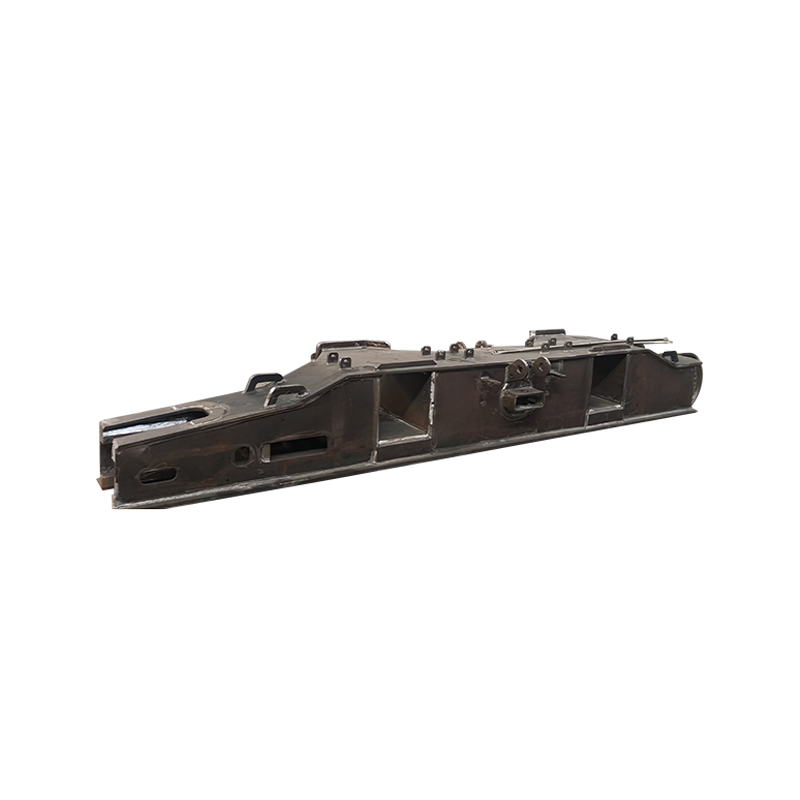
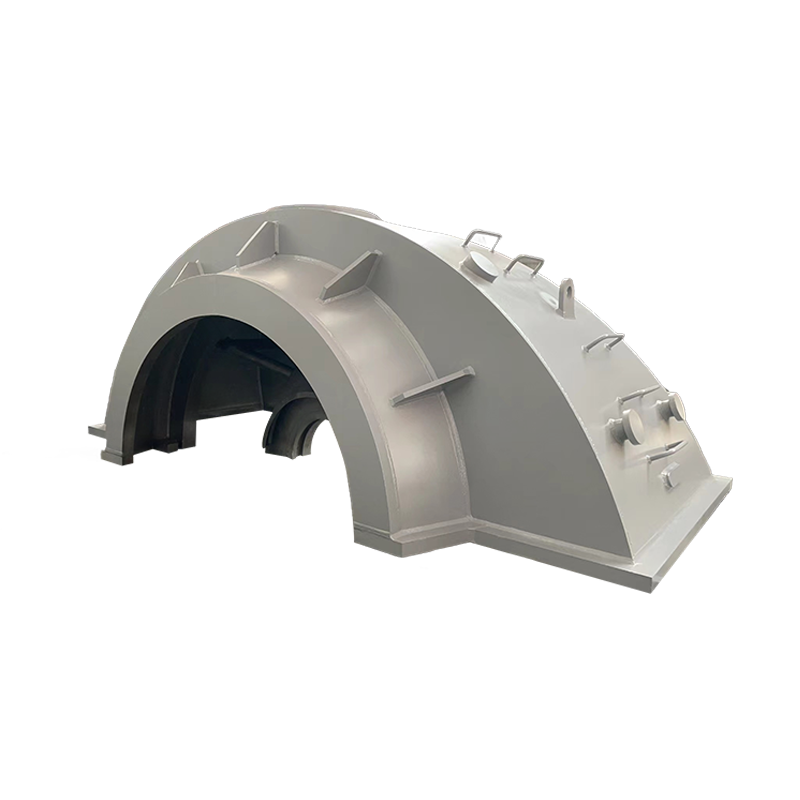
This integrity is fundamentally derived from the material from which the bucket’s core structure is built: carbon steel. Chosen for its exceptional blend of properties, carbon steel provides the skeletal strength that allows these buckets to withstand phenomenal forces. The key structural parts—the side plates, reinforcement straps, brackets, and lugs—are typically fabricated from high-grade carbon steel. This material offers an optimal balance of high tensile strength, superior impact resistance, and remarkable durability, forming a robust framework to which more specialized wear parts like teeth and cutting edges are attached. Without the resilience of these carbon steel components, the bucket would quickly succumb to deformation, fatigue, and catastrophic failure.
1.3 Relevance to Construction, Mining, and Infrastructure Projects
The relevance of these robust carbon steel structural parts extends far beyond the excavator itself; they are enablers of modern development. In construction, they ensure the timely excavation of foundations and site preparation. In mining, they endure extreme abrasion to facilitate resource extraction. In large-scale infrastructure projects—such as building highways, dams, and tunnels—the reliability of these components is paramount to meeting deadlines and maintaining safety standards. The continuous evolution of carbon steel grades and fabrication techniques for these parts directly contributes to advancing the capabilities of heavy machinery, driving efficiency, and supporting the growth of industries that build and sustain our world.
2. Importance of Carbon Steel in Excavator Buckets
The selection of Excavator Bucket Carbon Steel Structural Parts is not arbitrary; it is the result of its unparalleled ability to meet the extreme demands of heavy-duty applications. This section breaks down the key properties that make carbon steel the industry standard.
2.1 Mechanical Strength and Load-Bearing Capacity
The primary function of an excavator bucket is to act as a load-bearing vessel for dense and often heavy materials. Carbon steel’s defining characteristic is its exceptional mechanical strength, characterized by high yield strength and tensile strength. Yield strength is the point at which a material begins to deform permanently, a critical threshold for a component constantly subjected to bending and prying forces. The high tensile strength ensures the bucket can handle the immense stress of being filled and lifted without cracking or failing. This robust strength allows the bucket’s structure to withstand not just the weight of the payload itself, but also the dynamic shock loads encountered when breaking through hard ground or rock.
2.2 Resistance to Wear, Impact, and Abrasion
An excavator bucket operates in an environment best described as an abrasive nightmare. Constant contact with sand, gravel, rock, and other abrasive materials subjects the bucket to severe wear. Carbon steel, particularly specific grades like High-Strength Low-Alloy (HSLA) steel or abrasion-resistant (AR) steel, is formulated to resist this degradation. Its hard microstructure provides a formidable barrier against abrasion, significantly extending the component’s service life. Furthermore, carbon steel offers superior impact toughness—the ability to absorb energy without fracturing. This is crucial for withstanding sudden impacts, such as hitting an unforeseen underground ledge or large boulder, which could shatter a more brittle material.
2.3 Cost-Effectiveness Compared with Alternative Materials
While materials like specialty alloys or composites may offer superior performance in one specific area (e.g., extreme wear resistance), they often do so at a prohibitive cost. Carbon steel presents the optimal balance between performance and economics. Its raw material cost is significantly lower than that of high-alloy alternatives. Additionally, carbon steel is highly fabrication-friendly. It can be easily cut, formed, and welded using common industrial processes, which keeps manufacturing costs down and allows for straightforward repairs and modifications in the field. This combination of affordable material costs, ease of fabrication, and more than adequate performance for the vast majority of applications makes carbon steel the most cost-effective solution, providing the best return on investment over the bucket’s operational life.
3. Key Structural Parts of Excavator Buckets
An excavator bucket is a system of integrated components, each with a specialized role. The carbon steel structural parts form the bucket’s core armor and load-bearing framework, working in concert to maximize performance and longevity. Understanding these key parts is essential to appreciating the bucket’s overall engineering.
3.1 Side Cutters and Reinforcement Plates
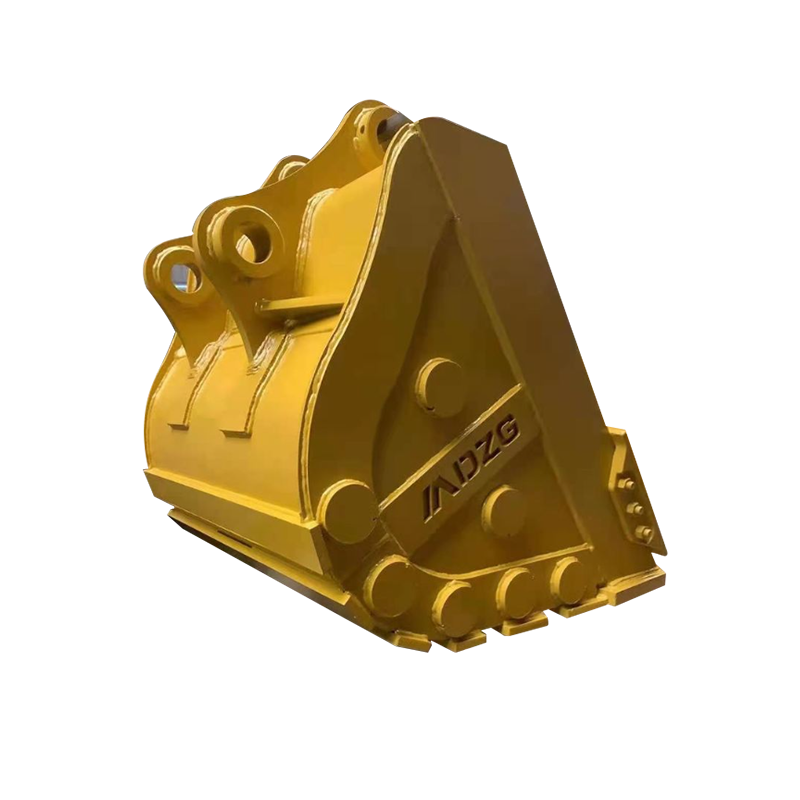
The sides of the bucket are subjected to extreme lateral abrasion and impact. Side cutters (or side wear plates) are strips of high-hardness steel welded along the top edges of the bucket’s side plates. Their primary function is to protect the main side plates from direct wear, acting as a sacrificial barrier. Behind these, reinforcement plates are strategically welded onto high-stress areas of the side plates and backbone. These reinforcements prevent buckling and deformation, distributing stress over a wider area and significantly enhancing the structural integrity of the entire bucket under heavy torsional and lateral loads.
3.2 Wear-Resistant Liners and Edges
The bottom of the bucket, which bears the brunt of scraping and digging, is fortified with replaceable wear parts. The cutting edge (or front lip) is the leading edge of the bucket that makes initial contact with the ground. It is typically a thick, hardened steel bar that can withstand intense abrasion. Wear-resistant liners or strips are often added to the inside bottom surface of the bucket. These liners, made from specialized abrasion-resistant (AR) steel, create a durable channel that facilitates material flow and protects the bucket’s floor from rapid wear, effectively extending the life of the primary structure.
3.3 Teeth, Adapters, and Shrouds
This subsystem is the bucket’s primary digging and penetration tool. Bucket teeth are the pointed tips that concentrate force for breaking up hard materials. They are mounted onto adapters (or bosses), which are permanently welded to the cutting edge. This design allows worn-out teeth to be replaced quickly without needing to replace the entire cutting edge. Shrouds (or wing shroud protectors) are installed on the sides of the adapters. They protect the ends of the cutting edge and the adapter bases from wear, ensuring a secure fit for the teeth and maintaining the cutting edge’s profile.
3.4 Brackets, Lugs, and Connection Points
These components are critical for the bucket’s connection to the excavator’s arm. Brackets and lugs are the high-strength carbon steel forgings or castings to which the bucket linkage pins are connected. They must endure immense and constantly shifting stresses from the hydraulic cylinders and linkage assembly. The integrity of these connection points is paramount for operator safety and precise machine control. Failure in a bracket or lug can lead to catastrophic detachment. Their design and fabrication prioritize supreme tensile strength and fatigue resistance to handle millions of load cycles over the bucket’s lifetime.
4. Manufacturing and Design Considerations
The exceptional performance of an excavator bucket is not achieved by material selection alone. It is the result of meticulous design and sophisticated manufacturing processes that optimize the inherent properties of carbon steel for specific, demanding applications. This phase determines the bucket’s durability, efficiency, and total cost of ownership.
4.1 Material Selection and Steel Grades
The choice of steel grade is the foundational decision, tailored to the bucket’s intended use. For the main body and structural supports, High-Strength Low-Alloy (HSLA) steels like ASTM A572 or comparable grades are common. They offer an excellent strength-to-weight ratio, reducing overall weight without sacrificing durability. For components facing direct abrasion, such as cutting edges, liners, and side cutters, Abrasion-Resistant (AR) steel plates (e.g., AR400, AR500) are specified. The number indicates the Brinell hardness value; higher numbers offer greater wear resistance but can be less formable. The design process involves carefully mapping these different grades onto the bucket to place the right material exactly where it is needed.
4.2 Heat Treatment and Welding Processes
After fabrication, heat treatment is often employed to enhance the steel’s properties. Quenching and tempering is a common process that increases the strength and toughness of the structural components, making them more resistant to impact and fatigue. Welding is arguably the most critical manufacturing step. Improper welding can create weak points and stress concentrations. Advanced techniques like Submerged Arc Welding (SAW) and Flux-Cored Arc Welding (FCAW) are used for their deep penetration and high deposition rates, creating strong, consistent joints. Pre- and post-weld heat treatments are also crucial to prevent cracking, especially when joining high-hardness AR steel to tougher, lower-carbon structural plates.
4.3 Balancing Weight with Structural Durability
Every kilogram added to the bucket reduces the machine’s potential payload capacity. Therefore, a central design challenge is achieving maximum strength with minimum weight. Engineers use Finite Element Analysis (FEA) software to simulate stresses during digging and lifting. This allows them to strategically add material only where it is needed—through reinforced ribs or thicker plates in high-stress zones—and remove unnecessary weight from low-stress areas. This precision engineering results in a bucket that is both lightweight for optimal efficiency and incredibly robust for long-term durability.
4.4 Advances in Precision Fabrication
Modern manufacturing has moved far beyond manual cutting and welding. Computer Numerical Control (CNC) plasma and laser cutting systems allow for the precise and repeatable cutting of complex shapes from steel plate, ensuring perfect fit-up for welding and improving overall structural integrity. 3D modeling and prototyping enable designers to visualize and test buckets in a virtual environment before any metal is cut, minimizing errors and accelerating development. These advances in precision fabrication lead to buckets with superior performance, longer service life, and higher quality consistency.
5. Applications in Construction and Mining
The true test of an excavator bucket’s design and material composition occurs in the field. The specific demands of various industries have led to specialized bucket configurations, but all rely on the fundamental strength provided by their carbon steel structural parts. These components are the workhorses that drive progress across multiple sectors.
5.1 Heavy Excavation and Earthmoving
In large-scale construction projects, such as building foundations, basements, and commercial developments, excavators are tasked with moving vast quantities of soil and earth. Here, general purpose buckets with a robust carbon steel structure are essential. They need to be wide enough for efficient digging and loading, yet strong enough to handle occasional encounters with rocks and debris. The durability of the side plates and the integrity of the linkage points ensure continuous, productive operation, forming the shape of our built environment from the ground up.
5.2 Quarrying and Aggregate Handling
Quarries present one of the most abrasive environments for heavy machinery. Buckets are used to load blasted rock, gravel, and crushed stone into trucks and crushers. In these applications, heavy-duty rock buckets are used. They are characterized by stronger, often reinforced, carbon steel bodies, fewer openings to prevent loss of fine materials, and extensive use of AR steel wear plates and liners. The structural parts must resist constant abrasion and impact from sharp-edged rocks, making the wear protection systems detailed in Section 3 absolutely critical for economic viability.
5.3 Road and Foundation Works
The precision required for grading slopes, digging trenches for utilities, and shaping roadbeds demands buckets designed for control. While slightly lighter, these buckets still rely on high-strength carbon steel frames to maintain their shape and transfer force accurately. The connection points (brackets and lugs) are particularly important for the fine control needed in these applications. Any flex or deformation in the structure would translate to imprecise work, highlighting how structural integrity directly influences not just power, but also accuracy.
5.4 Mining Operations with High Abrasion Demands
Mining represents the pinnacle of demand for excavator buckets. Whether in open-pit mining for metals or large-scale coal mining, buckets face extreme wear, massive payloads, and relentless cycles. Mass excavation buckets used here are engineered with survival as the primary goal. They feature the highest-grade AR steel liners, extra-thick side cutters, and massively reinforced structural frames. The carbon steel used in these applications is often subjected to the most rigorous heat treatments and welding procedures to ensure it can withstand forces that would destroy a lesser bucket, maximizing uptime in an industry where every minute of downtime is exceptionally costly.
6. Challenges and Industry Trends
The industry surrounding excavator bucket components is not static; it is shaped by a dynamic interplay of economic pressures, evolving customer demands, and technological innovation. Manufacturers and end-users alike must navigate these challenges while adapting to new trends that are redefining equipment performance and longevity.
6.1 Rising Raw Material Costs and Supply Chain Concerns
The volatility of the global steel market directly impacts the cost of manufacturing carbon steel structural parts. Fluctuations in iron ore prices, energy costs, and international trade policies can lead to unpredictable pricing and availability. Furthermore, global events can disrupt complex supply chains, causing delays in raw material delivery. This environment pressures manufacturers to improve operational efficiency and inventory management while forcing contractors to carefully evaluate the total lifecycle cost of their equipment, weighing initial purchase price against long-term durability.
6.2 Demand for Longer Service Life and Reduced Downtime
In highly competitive sectors like mining and large-scale construction, equipment uptime is directly correlated with profitability. There is a growing, non-negotiable demand from end-users for components that last longer between repairs or replacements. This trend drives the need for buckets with enhanced wear characteristics. The focus has shifted from simply fixing broken parts to implementing proactive maintenance schedules and using designs that maximize operational hours, thereby reducing the frequency and cost of unscheduled downtime.
6.3 Adoption of High-Strength Alloys and Composite Reinforcements
While carbon steel remains the backbone, there is a growing adoption of advanced materials to address specific weaknesses. The use of high-strength, low-alloy (HSLA) steels is becoming more sophisticated, allowing for lighter yet stronger bucket designs. In extreme-wear areas, manufacturers are increasingly integrating even harder materials, such as tungsten carbide overlays or ceramic-composite liners, in key wear zones. These are often applied as patches or inserts on the primary carbon steel structure, creating a hybrid component that offers the toughness of steel with the extreme wear resistance of advanced materials.
6.4 Sustainability and Recycling of Steel Components
Environmental considerations are now a core business factor. The steel industry is a significant energy consumer, leading to a heightened focus on sustainability. A key advantage of carbon steel is its 100% recyclability. At the end of its service life, a worn-out bucket or component can be melted down and repurposed without any loss of quality. This circular economy model is a powerful trend. Manufacturers are also looking at ways to reduce the environmental footprint of production, exploring more energy-efficient heat treatments and processes that minimize waste, thereby appealing to a market increasingly conscious of its ecological impact.
7. Future Outlook
The evolution of excavator bucket structural parts is far from complete. Driven by the demands for greater efficiency, connectivity, and sustainability, the next generation of these components is poised to become smarter, more durable, and more specialized. The future points toward an integrated system where the bucket is not just a passive tool, but an active, data-providing part of the machine’s ecosystem.
7.1 Innovations in Wear-Resistant Coatings
Beyond the base material, surface engineering will play an increasingly critical role. Advanced coating technologies like High-Velocity Oxygen Fuel (HVOF) thermal spraying will see wider adoption. This process allows for the application of extremely hard, dense layers of tungsten carbide or other ceramics onto high-stress areas of the carbon steel structure. These coatings act as a super-resistant skin, drastically reducing abrasion and extending component life far beyond what is possible with conventional AR steel alone. Research into nano-structured coatings promises even greater leaps in surface hardness and friction reduction.
7.2 Integration of Smart Monitoring Systems
The concept of the “smart bucket” is emerging. The integration of IoT (Internet of Things) sensors directly into bucket structural parts will enable real-time monitoring of conditions. Strain gauges could measure load stresses to prevent overloading, while embedded RFID tags or wear sensors could track the remaining thickness of critical parts like side plates and cutting edges. This data, transmitted to the operator’s cabin or a fleet management portal, would enable predictive maintenance, scheduling repairs precisely when needed before a catastrophic failure occurs, thus maximizing uptime and safety.
7.3 Customization for Specialized Industries
The trend toward application-specific design will intensify. Instead of one-size-fits-all solutions, manufacturers will leverage advanced modeling and additive manufacturing (3D printing) techniques to produce highly customized buckets. This could include optimizing the bucket’s shape and reinforcement pattern for a specific material (e.g., wet clay vs. dry granite) or for a unique task in emerging industries like underwater excavation or landfill remediation. This hyper-customization will ensure peak efficiency and durability for niche applications.
7.4 Prospects for Global Market Growth
The global demand for excavator buckets and their structural parts is expected to grow steadily, fueled by continued investment in infrastructure development, urbanization, and mining activities worldwide, particularly in emerging economies. This growth will not only be in volume but also in technological sophistication. Markets will increasingly value high-performance, long-life products over low-cost, short-life alternatives, driving innovation and rewarding manufacturers who invest in the advanced materials and designs outlined above.
8. Conclusion
8.1 Recap of the Role of Carbon Steel Structural Parts
The excavator bucket is a masterpiece of focused engineering, and its effectiveness is fundamentally rooted in the performance of its carbon steel structural parts. From the side plates and reinforcement straps that form its core skeleton to the critical lugs and brackets that connect it to the machine, these components provide the essential combination of high tensile strength, exceptional impact resistance, and remarkable durability. They are the unsung heroes that allow the bucket to withstand the immense forces of digging, lifting, and loading, forming the robust foundation upon which all other wear parts depend.
8.2 Their Continuing Impact on Heavy Equipment Efficiency
The efficiency of modern construction, mining, and infrastructure projects is inextricably linked to the reliability of this equipment. The ongoing optimization of carbon steel grades, advanced manufacturing techniques like precision cutting and controlled welding, and intelligent design informed by FEA analysis have continuously elevated the performance benchmarks. This relentless pursuit of improvement directly translates to greater productivity, reduced downtime, and lower total operating costs. The structural integrity of these parts ensures that heavy machinery can operate at peak performance, meeting the demanding schedules and economic pressures of contemporary projects.
8.3 The Pathway Toward Durable and Sustainable Solutions
Looking ahead, the pathway for excavator bucket components is clear: the integration of smarter materials and smarter technologies. The industry is moving beyond traditional steel to embrace advanced wear-resistant coatings, embedded sensor systems for predictive maintenance, and hyper-customization for specialized applications. Crucially, this innovation is increasingly framed within the context of sustainability, leveraging steel’s innate recyclability and seeking more energy-efficient production methods. The future lies not in replacing carbon steel, but in enhancing it—creating next-generation structural parts that are simultaneously more durable, more intelligent, and more environmentally responsible, ensuring they continue to build the foundations of our world for years to come.