 +86-573-86868360
 Inquiry
 English
 Español
 عربى
عربى

Content
- 1 What Are General Equipment Steel Structure Components?
- 2 Key Types of Steel Structure Components for Industrial Equipment
- 3 Materials Used in Equipment Steel Structure Components
- 4 Manufacturing Processes: From Raw Steel to Finished Component
- 5 Industry Applications
- 6 How to Choose the Right Steel Structure Component Supplier
In industrial manufacturing and heavy engineering, general equipment steel structure component serve as the backbone of machinery, production lines, and facility infrastructure. These engineered steel parts are purpose-built to support, stabilize, and enclose industrial equipment across a wide range of operating environments. Understanding the types, materials, and manufacturing standards behind these components is essential for procurement engineers, plant managers, and project developers who need reliable, long-term performance from their equipment systems.
What Are General Equipment Steel Structure Components?
General equipment steel structure components refer to fabricated steel parts and assemblies designed to provide structural support, enclosure, or load transfer for industrial machines and systems. Unlike standard building structural steel, which is engineered primarily for architectural loads, equipment steel structure components are tailored to the specific weight, vibration, thermal, and operational demands of the machinery they serve.
These components connect with one another to form rigid, load-bearing frameworks that keep equipment stable under continuous operation. They appear in power generation facilities, manufacturing plants, chemical processing units, mining operations, and logistics infrastructure — essentially anywhere that heavy equipment must operate safely and consistently over long periods.
The distinction matters in procurement: equipment steel structure components often require tighter dimensional tolerances, more rigorous surface treatment, and compatibility with machine-specific mounting interfaces, compared to general construction steel.
Key Types of Steel Structure Components for Industrial Equipment
Support Structures and Equipment Frames
Support structures are the most fundamental category. They are designed to hold and stabilize heavy machinery — turbines, conveyor systems, large mechanical presses, and generators. These structures take the form of columns, beams, and integrated frames, sized and configured according to the weight and footprint of the equipment above them. In manufacturing plants and power stations, support structures are often engineered as standalone assemblies that can be installed, aligned, and bolted to a concrete foundation without requiring field welding.
Frames and Housings
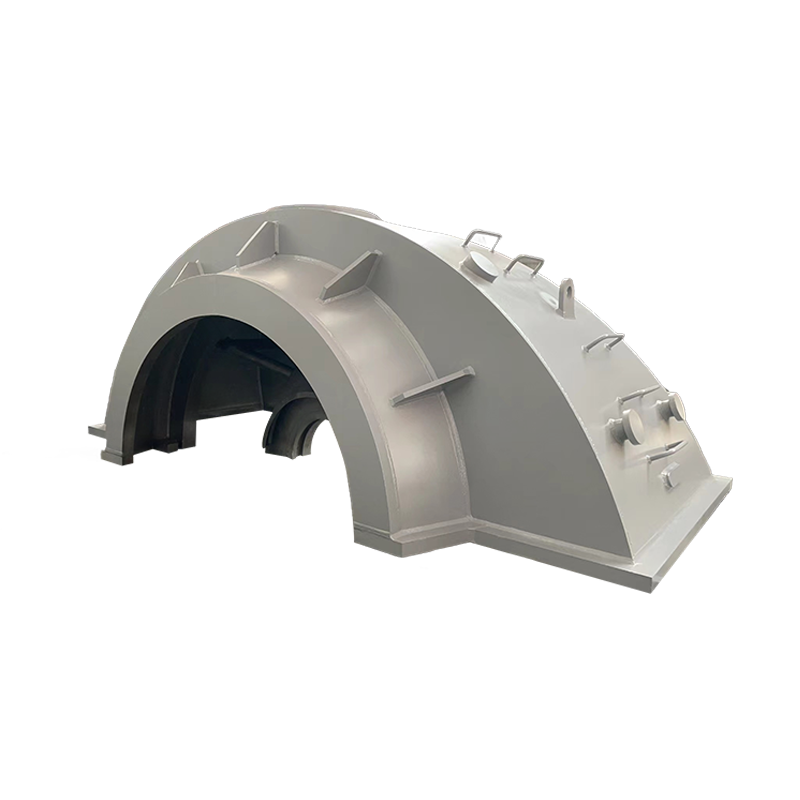
Frames and housings provide both the structural enclosure and the mechanical interface for sensitive equipment. They protect internal components from dust, impact, moisture, and operational vibration while providing precise mounting surfaces for rotating or reciprocating elements. These structures are common in the automotive assembly industry, aerospace ground support equipment, and electrical switchgear enclosures. Materials are selected for corrosion resistance — mild steel, stainless steel, and galvanized steel are typical choices depending on the operating environment.
Heavy Equipment Frames
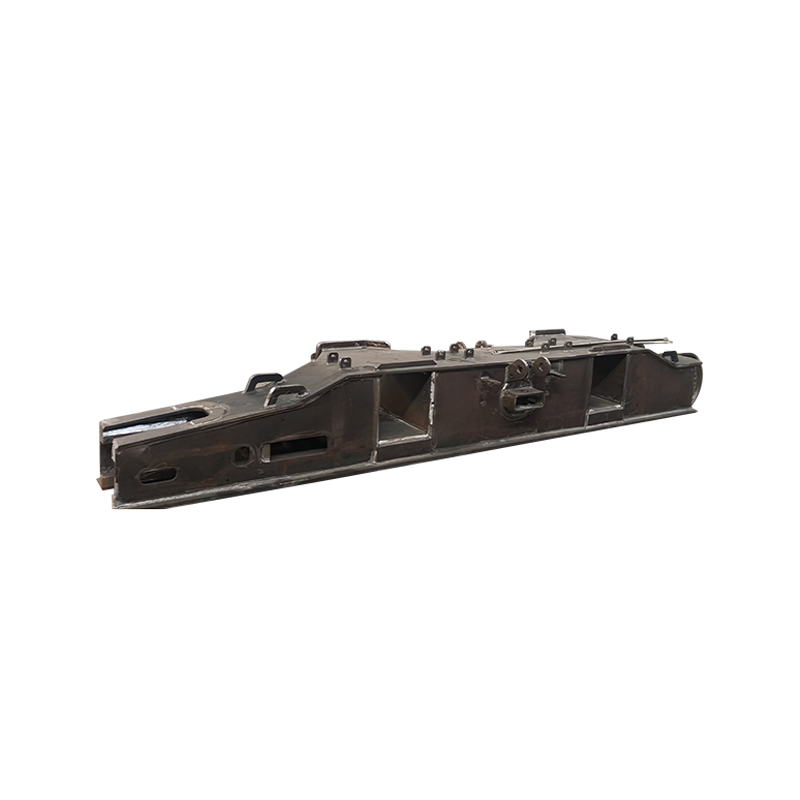
For cranes, excavators, presses, and heavy-duty pumps, standard structural profiles are insufficient. Heavy equipment frames are engineered from high-strength alloy steel or structural carbon steel to handle extreme dynamic loads while maintaining dimensional stability over years of operation. These frames are designed with generous safety margins and typically undergo non-destructive testing to verify weld integrity before delivery.
Pipe Racks and Equipment Support Platforms
Pipe racks are structural steel frameworks that route piping, cable trays, and conduit between equipment and utility areas. They are critical in petrochemical, refinery, and power plant environments. Equipment support platforms — elevated steel decks — allow operators to access machinery safely at height, while also distributing equipment loads across a wider structural base. Both require careful attention to bracing and connection design to control deflection under combined static and dynamic loads.
Steel Enclosures and Shelters
Steel enclosures protect sensitive electrical components, control panels, and instrumentation from environmental hazards. In power plants, telecommunications facilities, and outdoor industrial installations, these shelters maintain internal conditions within strict limits of temperature, humidity, and particulate exposure. Enclosure fabrication demands consistent panel flatness, tight seam welding, and compatible surface coatings that meet IP rating requirements.
| Component Type | Typical Application | Common Material |
|---|---|---|
| Support structures / frames | Conveyors, turbines, presses | Carbon steel, alloy steel |
| Frames and housings | Automotive lines, switchgear | Mild steel, stainless steel |
| Heavy equipment frames | Cranes, excavators, pumps | High-strength alloy steel |
| Pipe racks and platforms | Petrochemical, power plants | Carbon steel (A36, A572) |
| Steel enclosures and shelters | Control panels, instrumentation | Galvanized steel, stainless steel |
Materials Used in Equipment Steel Structure Components
Material selection drives the performance, service life, and total cost of equipment steel structure components. The three most widely used material categories are carbon steel, alloy steel, and stainless steel, each suited to different load and environmental conditions.
Carbon Steel
Carbon steel is the workhorse material for general equipment structures. Low-carbon (mild) steel — with carbon content between 0.04% and 0.30% by weight — offers a practical balance of weldability, formability, and cost. It is used extensively in support frames, platforms, and pipe racks where the operating environment is controlled and corrosion protection is applied through coating. Common grades include ASTM A36 and A572, which are widely recognized under international procurement standards.
Alloy Steel
Where loads are extreme or operating conditions involve shock and impact, alloy steel provides the required tensile strength and impact resistance that carbon steel cannot match. High-strength alloy steel is the standard material for heavy equipment frames in construction and mining, where structural integrity under repeated dynamic loading is non-negotiable. Medium- and high-carbon structural steel, with carbon content from 0.31% to 1.50% by weight, is appropriate for mechanical engineering applications requiring greater hardness.
Stainless Steel and Galvanized Steel
For equipment operating in corrosive environments — food processing, marine installations, chemical plants — stainless steel and galvanized steel extend component service life significantly. Galvanized finishes provide a cost-effective barrier against atmospheric corrosion for outdoor structures, while stainless steel grades offer inherent resistance to chemical attack in process environments.
Manufacturing Processes: From Raw Steel to Finished Component
The production of high-quality equipment steel structure components follows a defined sequence of operations, each of which contributes to dimensional accuracy, structural integrity, and surface performance.
- Cutting and profiling: Band saws, plasma arc systems, and laser cutting machines reduce raw steel sections and plates to the required dimensions with minimal material waste. CNC-controlled cutting ensures consistency across production batches.
- Forming and bending: Press brakes and plate bending machines shape steel into required profiles — V-bends, U-bends, curved sections — with tolerances matched to assembly requirements. Rolling machines produce curved or cylindrical forms for enclosures and housings.
- Welding and machining: Arc welding and gas-shielded MIG/MAG welding join structural elements with full-penetration welds where load demands require it. Post-weld machining ensures that mating surfaces and bolt-hole patterns meet specified tolerances.
- Shot blasting and surface preparation: Before any protective coating is applied, shot blasting removes mill scale, rust, and weld spatter from all steel surfaces. This step is essential for coating adhesion and long-term corrosion protection.
- Painting and coating: Spray painting, powder coating, and specialized industrial coatings protect finished components against corrosion and environmental degradation. The coating system is selected based on the deployment environment — indoor, outdoor, or chemical exposure.
Modern fabrication facilities integrate CNC beam line processing — enabling sawing, drilling, coping, and notching of H-sections, angles, and hollow structural sections in a single automated pass — alongside CNC angle lines for rapid production of clips, gusset plates, and brackets. This integration reduces handling time and improves part-to-part accuracy across large production volumes.
Industry Applications
General equipment steel structure components are indispensable across a broad range of industries. In manufacturing facilities, they form the support structures for conveyor systems, press lines, and robotic assembly equipment. In power generation — including thermal, nuclear, and renewable energy installations — steel frames and support platforms underpin turbines, generators, and solar panel mounting systems. Offshore wind energy infrastructure, in particular, depends on marine-grade steel structures to support turbine assemblies and transmission equipment under severe environmental loads.
In petrochemical and refinery operations, pipe racks and equipment platforms are engineered to carry not only the weight of process piping and vessels, but also the thermal expansion forces generated by high-temperature fluid systems. In mining and construction, heavy equipment frames for excavators, crushers, and conveying systems must withstand continuous impact and abrasion in demanding outdoor environments.
The automotive industry relies on precision steel frames and housings for vehicle assembly line equipment, where dimensional consistency directly affects production quality. Across all these sectors, the common requirement is the same: steel structure components that perform reliably under the specific mechanical, thermal, and environmental conditions of each application.
How to Choose the Right Steel Structure Component Supplier
Selecting a capable supplier for general equipment steel structure components involves evaluating several dimensions of manufacturing competence and service capability.
- Technical capability: Confirm that the supplier operates CNC cutting, forming, welding, and surface treatment equipment matched to the scale and complexity of your components. Suppliers who offer design-to-fabrication services reduce coordination friction and improve dimensional accuracy.
- Material certifications: Steel components for critical equipment applications should be produced from certified grades with traceable mill test reports. Recognized standards such as ASTM A36, A572, and A992 provide a consistent quality baseline.
- Quality systems: ISO 9001 certification and AWS D1.1 welding qualification are meaningful indicators of process control. Suppliers with structured non-destructive testing capabilities — ultrasonic testing, magnetic particle inspection — can verify weld integrity on critical joints.
- OEM and customization experience: Equipment steel structure components are rarely standard catalog items. Suppliers with a demonstrated record of OEM partnerships and custom fabrication — including the ability to work from 3D models and engineering drawings — are better positioned to deliver components that integrate correctly with your equipment designs.
- Surface treatment and packaging: For components destined for export or long-term storage, confirm that the supplier's coating specifications, packaging standards, and shipping documentation meet your project requirements.
When evaluating total project cost, consider not only unit price but lead time, shipping logistics, and the supplier's ability to support design iterations. A supplier who combines fabrication capability with responsive technical support reduces total project risk, particularly on custom or first-article components.