 +86-573-86868360
 Inquiry
 English
 Español
 عربى
عربى

Content
- 1 Why Steel Fabrication Quality Defines TBM Performance
- 2 Core Steel Components in a Tunnel Boring Machine
- 3 Material Selection: The Foundation of Structural Reliability
- 4 Precision Welding and Dimensional Control
- 5 Non-Destructive Testing and Quality Assurance
- 6 The Link Between Fabrication Precision and Underground Safety
- 7 What to Look for in a TBM Steel Fabrication Partner
- 8 Conclusion: Precision Is Not Optional in TBM Fabrication
Why Steel Fabrication Quality Defines TBM Performance
A Tunnel Boring Machine is one of the most demanding pieces of engineering in existence. Modern TBMs can weigh over 6,000 tons, stretch beyond 150 meters in length, and exert thrust forces measured in tens of thousands of kilonewtons — all while operating hundreds of meters underground where access for repair is difficult, dangerous, or simply impossible. In this environment, the structural integrity of every steel component is not a preference — it is a prerequisite for safety.
The steel structures that make up a TBM — from the cutterhead assembly and shield segments to rear trailer frames and thrust cylinder brackets — must endure cyclical loading, high-pressure hydraulic forces, abrasive ground contact, and constant vibration across project timelines that often span years. A single fabrication failure deep underground can halt an entire tunneling operation, triggering costly delays and serious safety risks for the crew working inside.
This is why the fabrication of TBM steel components demands a level of precision, material discipline, and quality control that goes far beyond standard structural metalwork. Understanding what sets high-quality TBM steel fabrication apart helps project engineers, procurement teams, and contractors make smarter sourcing decisions before a single meter of tunnel is bored.
Core Steel Components in a Tunnel Boring Machine
TBMs are integrated systems where every subsystem depends on the mechanical reliability of the one beside it. The most structurally critical steel fabrications include the following:
- Cutterhead Structure: The rotating face of the TBM, this is a robust welded steel assembly that carries disc cutters and drag tools directly against hard rock or mixed-face ground. It must transmit enormous torque while resisting impact and wear across millions of rotation cycles.
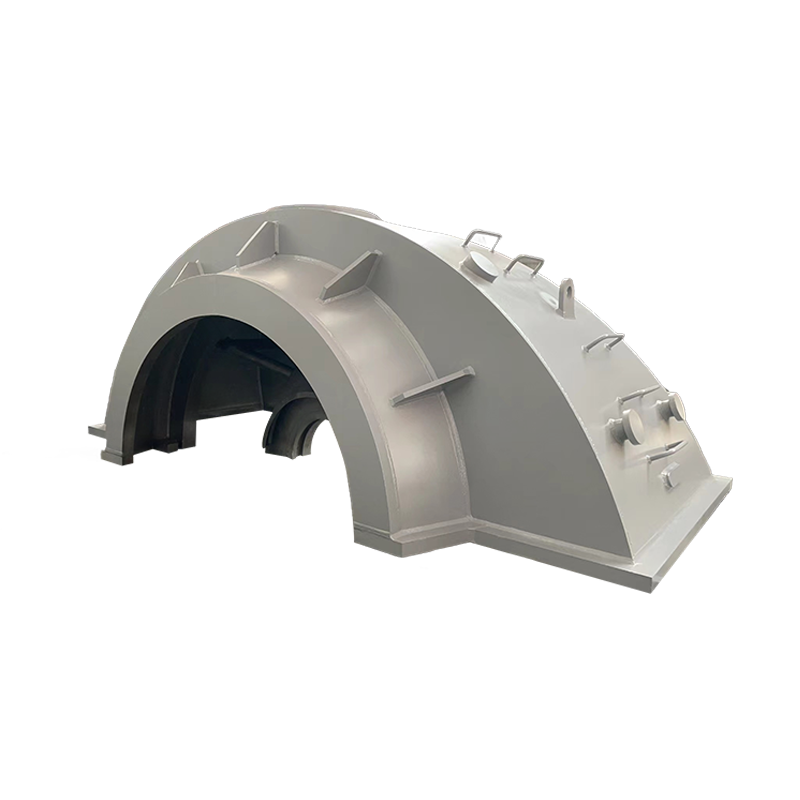
- Shield Segments: Cylindrical steel shells that encase the machine and stabilize the tunnel bore immediately behind the cutterhead. Shield plates must maintain dimensional accuracy to fractions of a millimeter to interface correctly with hydraulic thrust cylinders and segment erectors.
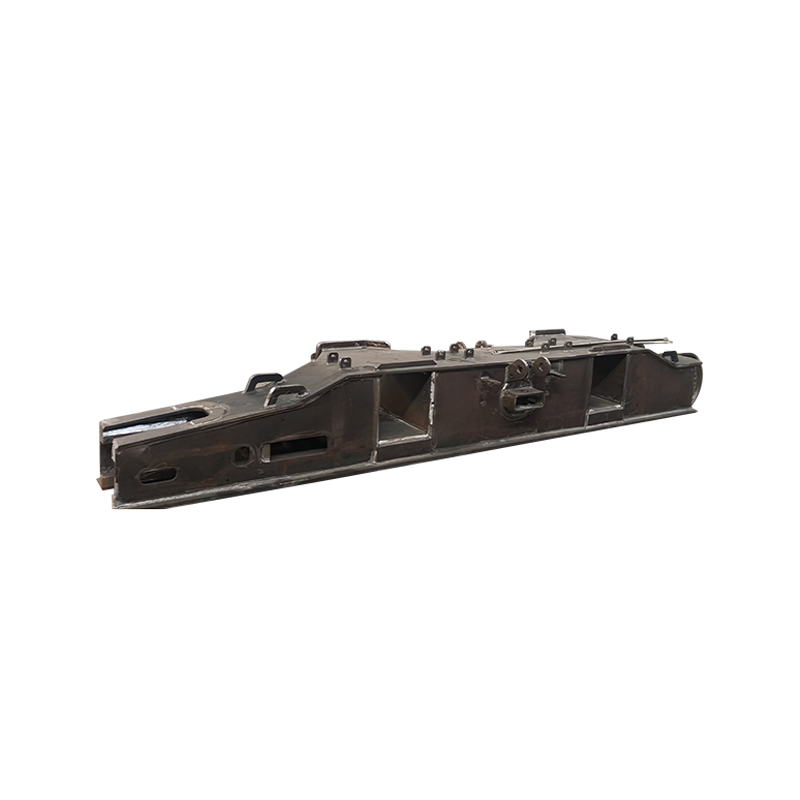
- Main Beam and Gripper Frames: The structural backbone of open-face TBMs, these components anchor the machine against tunnel walls and transfer propulsion forces forward. They are subject to high bending moments and must resist fatigue across extended campaigns.
- Rear Trailer Frames: Multi-section steel platforms that trail the TBM and house electrical, hydraulic, and ventilation systems. Despite being less visible than the cutterhead, trailer frame integrity is critical — a structural failure here can disable the entire machine.
- Thrust Cylinder Brackets and Reaction Frames: Steel brackets that receive and distribute the forces of the hydraulic propulsion system. Weld quality and dimensional accuracy at these interfaces directly affect how evenly thrust is applied to the tunnel lining segments.
Each of these components requires a tailored fabrication approach based on its load profile, operating environment, and the consequences of failure. There is no universal specification — precision fabrication is always project-specific.
Material Selection: The Foundation of Structural Reliability
Not all steel is equal, and in TBM fabrication, choosing the wrong grade can produce components that look correct on paper but fail prematurely underground. The steel grades most commonly specified for TBM structural work include high-strength low-alloy (HSLA) steels, quenched and tempered structural plates, and wear-resistant steel for cutterhead surfaces and shield edges.
For primary structural members — shield shells, main frames, and trailer structures — steels in the S355 to S690 range (per EN 10025) are typical, offering tensile strengths from 470 MPa up to 770 MPa depending on the grade. Higher yield strength allows for thinner, lighter sections without sacrificing load capacity, an important consideration given the logistical challenge of transporting TBM components to remote or urban tunneling sites.
Material traceability is equally important. Every plate and section used in a structural TBM component should be accompanied by a mill certificate verifying its chemical composition, mechanical properties, and heat treatment history. This documentation is not a bureaucratic formality — it is the factual basis for weld procedure qualification, NDT acceptance criteria, and regulatory compliance. Fabricators who cannot supply full material traceability represent an unacceptable risk in tunneling applications.
Precision Welding and Dimensional Control
Welding is where material becomes structure, and in TBM fabrication, weld quality is the single most consequential variable in component life. TBM steel structures are predominantly fabricated using submerged arc welding (SAW) for heavy plate joints and multi-pass MIG/MAG processes for complex geometry intersections. All weld procedures must be qualified to recognized standards — most commonly ISO 15614-1 or AWS D1.1 — with welders certified to the procedures they execute.
Distortion control during welding is a persistent challenge on large TBM structures. Thermal expansion and contraction during multi-pass welding can introduce residual stresses and geometric deviation that, if uncorrected, compromise the fit-up of mating assemblies on-site. Skilled fabricators use sequenced welding plans, pre-set joint geometry, and post-weld correction by heat or mechanical means to maintain dimensional tolerances across structures that may be 5 to 15 meters in diameter.
Flatness, roundness, and bore alignment are the critical dimensional checks for shield segments and ring structures. For a 10-meter diameter shield shell, diameter tolerances are typically held within ±5 mm across the entire circumference — a demanding target when welding thick plates that naturally want to distort. This precision is achieved through jigging, staged fabrication sequences, and continuous measurement during assembly, not after.
Non-Destructive Testing and Quality Assurance
Visual inspection alone is insufficient for TBM steel components. Internal weld defects — porosity, lack of fusion, hydrogen cracking — are invisible to the eye but can propagate under cyclic load and trigger catastrophic fracture. Comprehensive non-destructive testing (NDT) is therefore standard practice in quality TBM fabrication programs.
The most widely used NDT methods in this context include:
- Ultrasonic Testing (UT): Used to detect internal planar defects in full-penetration butt welds. Phased array UT (PAUT) is increasingly preferred for its ability to scan complex geometries with greater resolution and data recording capability.
- Magnetic Particle Testing (MT): Applied to detect surface and near-surface cracks in ferromagnetic steel components, particularly at weld toes and high-stress geometry transitions.
- Radiographic Testing (RT): Used selectively for volumetric weld inspection where access geometry permits. RT provides a permanent film or digital record of weld quality.
- Dimensional Verification: Full 3D laser scanning is increasingly used on large TBM assemblies to verify that fabricated geometry matches design intent within tolerance across the entire structure — not just at spot-check locations.
A robust inspection and documentation package — including weld maps, NDT reports, dimensional records, and material certificates — should accompany every major TBM fabrication. This package serves as the quality baseline for the life of the component and provides the evidence base if any in-service issue requires investigation.
The Link Between Fabrication Precision and Underground Safety
The connection between steel fabrication quality and the safety of underground workers is direct and well-established. TBMs improve safety by enclosing the working environment and mechanizing the most hazardous aspects of excavation — but this protective function depends entirely on the structural integrity of the steel that forms the machine. A shield that deforms under ground load, a thrust bracket that cracks under cyclic stress, or a rear trailer frame that fails due to a poor weld all represent failures that originate on the fabrication floor, not underground.
High-precision fabrication is, in the most literal sense, an investment in worker safety. Project teams that treat TBM steel components as commodity items — sourcing purely on unit cost — tend to discover the real costs of this approach through unplanned downtime, component replacement in confined underground conditions, and in the worst cases, incidents that could have been prevented by better quality control upstream.
Experienced TBM fabricators understand that their work does not end when a component leaves the factory. They build for the life of the tunnel, not just for delivery acceptance. That means designing for maintenance access, specifying surface treatments that survive the corrosive underground atmosphere, and ensuring that all mating interfaces are fabricated to tolerances that allow assembly to proceed correctly in the field.
What to Look for in a TBM Steel Fabrication Partner
Selecting the right fabrication partner for TBM steel components requires evaluation across several dimensions beyond price and delivery lead time. The following criteria should form the basis of any serious qualification process:
- Certified Welding Management: Look for fabricators operating under ISO 3834-2 or equivalent welding quality management frameworks. Certification confirms that welding processes, welder qualifications, and inspection activities are systematically controlled.
- Heavy Plate Fabrication Capability: TBM components typically involve plate thicknesses from 20 mm to over 100 mm. The fabricator must have appropriate cutting, rolling, and welding capacity for this range, including large-format CNC cutting tables, plate rollers with adequate capacity, and heavy-duty positioners.
- Proven Track Record: Prior experience fabricating TBM components — specifically, documented delivery of completed assemblies to recognized machine builders or contractors — is the most reliable indicator of capability. Ask for references and delivery records.
- In-House NDT and Dimensional Inspection: Fabricators who rely entirely on third-party inspection introduce lead time delays and communication gaps. In-house NDT capability signals a culture of quality ownership rather than compliance-only thinking.
- Engineering and Drawing Review Capability: The best fabrication partners review designs proactively, identifying features that are difficult or impossible to fabricate to tolerance and proposing solutions before production begins. This capability prevents costly design-fabrication mismatches.
Explore our heavy steel fabrication capabilities to understand how our production processes and quality systems are aligned to the demanding requirements of TBM and tunneling equipment manufacturing.
Conclusion: Precision Is Not Optional in TBM Fabrication
Tunnel boring machines operate at the intersection of extreme engineering and extreme consequence. The steel components that form their structure are not engineering afterthoughts — they are the load path through which enormous forces are safely managed, and the physical barrier between workers and the ground around them. Fabricating these components to the required standard demands deep knowledge of materials, welding metallurgy, dimensional control, and quality management.
For project teams responsible for specifying and procuring TBM steel components, the message is clear: precision fabrication is not a premium option — it is the baseline requirement for safe and reliable tunnel construction. Choosing a fabrication partner on cost alone is a false economy in applications where component failure is measured not in downtime hours, but in human risk.
Contact our engineering team to discuss your TBM fabrication requirements and how our capabilities can support your next underground project.