 +86-573-86868360
 Inquiry
 English
 Español
 عربى
عربى

Content
- 1 Steel Structure Components in General Equipment: What Fails First, and Why
- 2 The Three Equipment Categories Where Steel Structure Components Are Most Critical
- 3 Material Specifications: The Numbers That Separate Adequate from Reliable
- 4 Precision Tolerances: What the Numbers Tell You About Supplier Capability
- 5 Practical Sourcing Checklist for Steel Structure Components
- 6 The Underlying Logic: Structural Components Set the Performance Ceiling
Steel Structure Components in General Equipment: What Fails First, and Why
Structural failure in general industrial equipment rarely starts with the rotating parts. It starts with the steel structure components that hold everything in place — the cylinder shells, flanges, bearing seats, and housing frames that operate under sustained stress, temperature swings, and abrasive contact every single day. When those components are undersized, poorly fabricated, or sourced without verified specs, downtime follows. This guide covers what to look for before that happens.
The Three Equipment Categories Where Steel Structure Components Are Most Critical
Not all general equipment puts equal demand on its structural parts. The highest-risk categories are those where components must simultaneously bear pressure loads, resist thermal deformation, and maintain dimensional stability over thousands of operating hours.
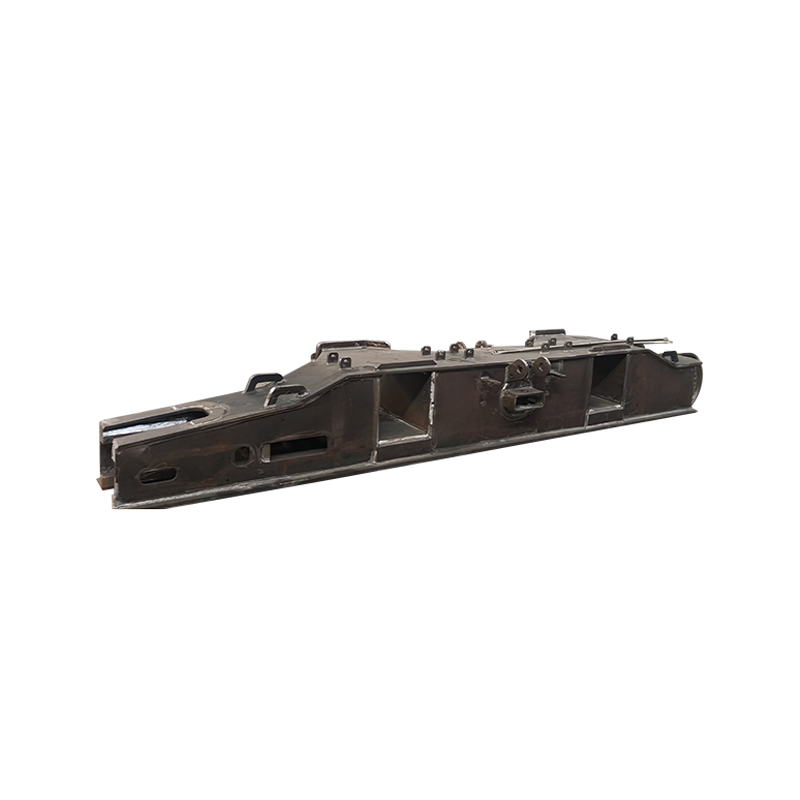
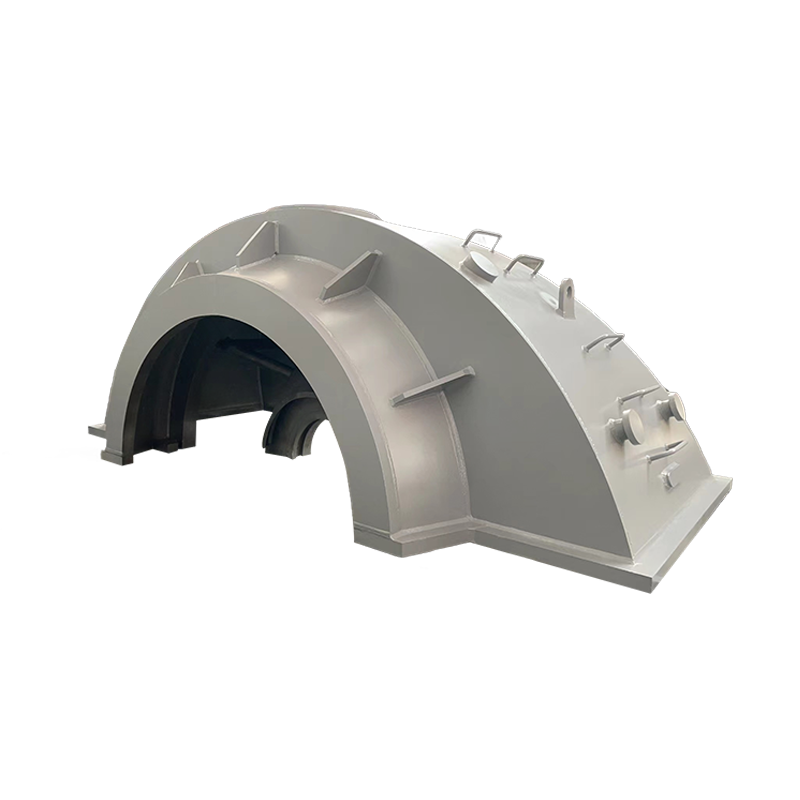
Steam turbines rank at the top of this list. Cylinder shells, diaphragms, compensators, and bearing seats must retain their geometry under high-temperature, high-pressure steam — often exceeding 500°C in high-pressure sections. Coal mills expose structural parts to continuous impact from grinding media and abrasive coal particles, making wall integrity and surface hardness the primary design challenges. Marine diesel engine housings and grille brackets operate in corrosive saltwater environments where structural degradation is accelerated by electrochemical action.
For each of these applications, you can find purpose-built general equipment steel structure components for steam turbines, coal mills, and marine systems specifically engineered to match these operating conditions — not adapted from generic fabrications.
Material Specifications: The Numbers That Separate Adequate from Reliable
Carbon content is the single most important variable in carbon steel structural parts — and the correct range depends entirely on what the component needs to do. For steam turbine cylinder applications, carbon content is typically held between 0.1% and 0.45%, with manganese and silicon additions tuned to the specific cylinder section. Low-pressure cylinder components use Mn-Si alloying to resist corrosion from wet steam; high-pressure connection flanges require controlled carbon content combined with normalizing and tempering heat treatment to optimize yield strength and fracture toughness.
Coal mill cylinder walls are fabricated from high-strength carbon steel with surface treatments specifically designed to enhance wear resistance and corrosion resistance — extending service intervals and reducing unplanned maintenance. These are not cosmetic finishes; they directly determine how long the cylinder retains its structural integrity under continuous grinding loads.
Material selection should always reference a recognized classification framework. ASTM's published steel standards for mechanical components and structural elements provide a reliable baseline for verifying that the material grade specified on a drawing actually matches what arrives at your facility.
For steam turbine structural parts specifically, steam turbine cylinder carbon steel structural parts go through multiple manufacturing stages: cast or forged blanks, precision machining, non-destructive testing (ultrasonic and magnetic particle), and surface treatment — all before assembly qualification.
Precision Tolerances: What the Numbers Tell You About Supplier Capability
Tolerance specifications are the most reliable proxy for a supplier's actual manufacturing capability. Anyone can claim precision; the dimensional requirements on a finished component reveal the truth.
For steam turbine cylinder structural parts, two tolerances are non-negotiable in practice:
- Cylinder center face flatness error must be controlled within 0.05 mm. Deviations beyond this compromise the steam seal and allow leakage that reduces turbine efficiency directly.
- Concentricity deviation of flange bolt holes must not exceed 0.1 mm. Errors here create uneven bolt load distribution and accelerate fatigue cracking at the flange joint.
These are not arbitrary specifications — they reflect the assembly accuracy requirements that determine turbine efficiency and operational safety. A supplier who cannot demonstrate process controls capable of holding these tolerances consistently should not be sourcing pressure-bearing structural components for power generation equipment.
For coal mill cylinders, the equivalent metric is wall thickness consistency. Coal mill cylinder carbon steel structural parts undergo wall thickness calculation verification to confirm they can withstand both continuous material impact and internal pressure simultaneously — two load cases that must be evaluated together, not independently.
Practical Sourcing Checklist for Steel Structure Components
Before placing an order for general equipment structural parts, run through these verification points with any supplier:
- Material traceability: Can they provide mill certificates linking the steel grade to the specific batch used in your components? This is the baseline for material verification.
- NDT coverage: Are ultrasonic testing and magnetic particle inspection part of the standard production process, or available only as an add-on? For pressure-bearing parts, both should be standard.
- Tolerance documentation: Do they publish the dimensional tolerances they hold in production — not just on the drawing, but as measured output data from finished parts?
- Heat treatment records: For components requiring normalizing or tempering, are time-temperature records kept and available for review?
- Surface treatment specification: Is the coating or surface hardening treatment quantified (hardness, thickness, adhesion) rather than described in general terms?
For applications where standard carbon steel grades are insufficient — corrosive marine environments, elevated-temperature exposures, or hybrid structural-functional roles — corrosion-resistant steel structure products designed for non-standard equipment configurations offer an alternative that avoids the compromises of forcing a standard grade into the wrong application.
The Underlying Logic: Structural Components Set the Performance Ceiling
Every efficiency improvement in a steam turbine, every reduction in coal mill maintenance frequency, every marine engine overhaul interval extension — all of these outcomes are bounded by the structural components that define the operating envelope. You cannot outperform a weak housing or a dimensionally inconsistent flange with better controls or more frequent lubrication. The structural layer sets the ceiling.
Sourcing decisions made at the component level have long-cycle consequences. A steam turbine cylinder is not replaced on a quarterly maintenance schedule. A coal mill cylinder operates for years before a major rebuild. The quality embedded in those parts at the time of fabrication — the carbon content, the heat treatment, the dimensional accuracy, the NDT results — determines what the equipment delivers across its entire service life.