 +86-573-86868360
 Inquiry
 English
 Español
 عربى
عربى

Content
- 1 Why Steel Structure Components Define Pipe Jacking Performance
- 2 The Two Load-Bearing Components You Cannot Compromise On
- 3 Material Selection: Why High-Strength Carbon Steel Remains the Standard
- 4 Fabrication Standards That Separate Reliable Components from Risk
- 5 Practical Guidance for Sourcing and Specifying These Components
Why Steel Structure Components Define Pipe Jacking Performance
Underground pipeline projects have zero tolerance for structural failure. Once a pipe jacking machine is driven into the earth, there is no practical way to stop mid-drive and swap out a failing component—the cost of a single structural breakdown can run into hundreds of thousands of dollars in delays, emergency repairs, and ground remediation. That reality puts the steel structure components built into pipe jacking machines at the center of every trenchless project decision.
These are not commodity parts. Each component must endure simultaneous cutting forces, hydraulic thrust loads, groundwater pressure, and abrasive soil contact—often for hundreds of meters without maintenance access. Material quality and fabrication precision determine whether a project finishes on schedule or grinds to a halt underground.
The Two Load-Bearing Components You Cannot Compromise On
A pipe jacking machine's structural system centers on two assemblies: the outer shell and the cutter head. Each performs a distinct mechanical function, and each has different failure modes that engineers must plan for.
The Machine Shell: Structural Backbone Under Pressure
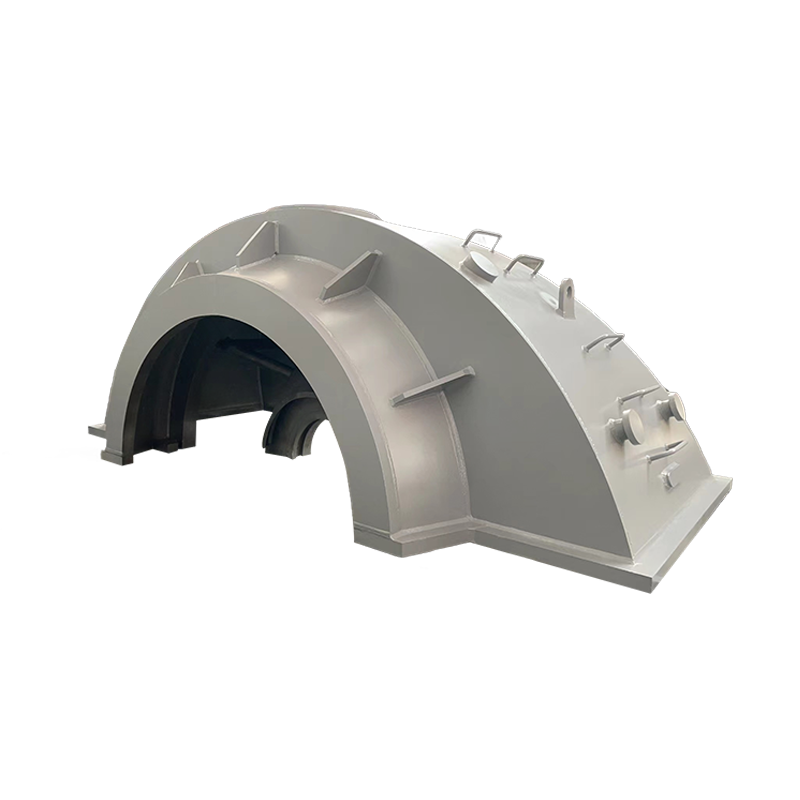
The shell forms the protective cylinder that houses every internal system of the machine. It must resist external soil and groundwater pressure from all sides while maintaining geometric precision so that drive seals, hydraulic lines, and guidance systems all stay aligned. Carbon steel structural parts of the pipe jacking machine shell need both rigidity against deformation and corrosion resistance against prolonged exposure to humid, high-pH underground environments. A shell that warps even slightly will compromise sealing integrity, allowing groundwater and fine soil particles to infiltrate the drive chamber—a failure mode that accelerates component wear across the entire machine.
Fabrication quality here is non-negotiable. Wall thickness tolerances, weld quality at joint sections, and surface treatment all directly affect how long the shell resists the underground environment before intervention is needed.
The Cutter Head: Where Forces Are Highest
If the shell is the backbone, the cutter head is the fist. It operates at the leading edge of the drive, crushing rock, breaking through gravel layers, and channeling excavated material into the slurry discharge system. The mechanical demands are severe: carbon steel structural parts for the pipe jacking machine cutter head must absorb high torque and cutting force simultaneously while the disc geometry keeps slag discharge channels clear. Blockage in those channels stalls the entire drive.
The cutting tool mounting positions must be precisely machined so that different tool types can be fitted for different strata—hard rock requires disc cutters; mixed-face ground may need scraper-style teeth. A cutter head that lacks dimensional accuracy at the tool seats forces crews to improvise in the field, and improvisation underground rarely ends well.
Material Selection: Why High-Strength Carbon Steel Remains the Standard
High-strength carbon steel dominates pipe jacking machine structures for straightforward reasons: it delivers the best combination of yield strength, toughness, weldability, and machinability at a practical cost. For components that must be precisely shaped, heat-treated, and welded into complex assemblies, carbon steel gives fabricators the process control that exotic alloys often cannot.
The critical properties for underground machine components break down as follows:
- Tensile and yield strength — determines how much jacking load the structure can carry without permanent deformation
- Toughness — resistance to crack propagation under impact and cyclic loads from cutting and thrust cycles
- Wear resistance — particularly important on cutter head faces and shell leading edges that contact abrasive soil
- Corrosion resistance — long-term protection in groundwater-saturated environments; surface treatments and alloy selection both contribute
- Weldability — complex shell and frame assemblies require consistent, defect-free welds throughout; poor weldability leads to HAZ cracking under operational stress
Steel selection should be matched to the specific geological profile of the project. Hard-rock drives demand higher abrasion resistance; coastal or tidal groundwater environments require stronger corrosion protection in both material grade and coating specification.
Fabrication Standards That Separate Reliable Components from Risk
Material grade alone does not guarantee performance—fabrication quality is equally decisive. The key process controls that distinguish high-reliability steel structure components for specialized underground equipment from standard commercial fabrication include:
- Controlled smelting and heat treatment — ensures consistent mechanical properties throughout the steel mass, not just at the surface
- Precision machining at critical interfaces — tool seats, seal surfaces, and bolted joint faces all require tight tolerances; deviations compound underground where realignment is impossible
- Non-destructive testing (NDT) — ultrasonic and magnetic particle inspection catch internal defects that visual inspection cannot detect
- Weld procedure qualification — documented weld procedures verified for the specific steel grades and joint geometries in the assembly
- Dimensional verification against engineering drawings — confirms that real-world geometry matches design intent before the component ships
Procurement teams sourcing these components should request traceability documentation covering material certificates, heat treatment records, inspection reports, and dimensional sign-offs. A supplier that cannot produce these documents is a supplier whose quality system cannot be verified.
Practical Guidance for Sourcing and Specifying These Components
Specifying pipe jacking machine steel structure components for a project requires aligning three variables: the geological conditions of the drive, the machine configuration, and the supplier's fabrication capabilities. A few practical checkpoints:
- Define the anticipated soil and rock conditions before specifying steel grades—hardness, abrasiveness, and groundwater chemistry all affect material requirements
- Confirm that the supplier has fabricated components for comparable machine diameters and drive lengths; larger machines impose disproportionately higher structural loads
- Clarify lead time early—custom structural assemblies for specialized underground equipment are not off-the-shelf items, and procurement delays can push construction schedules by weeks
- Require pre-shipment inspection at the factory before components are packaged for transport; damage in transit is difficult to distinguish from manufacturing defects once a crate is opened on site
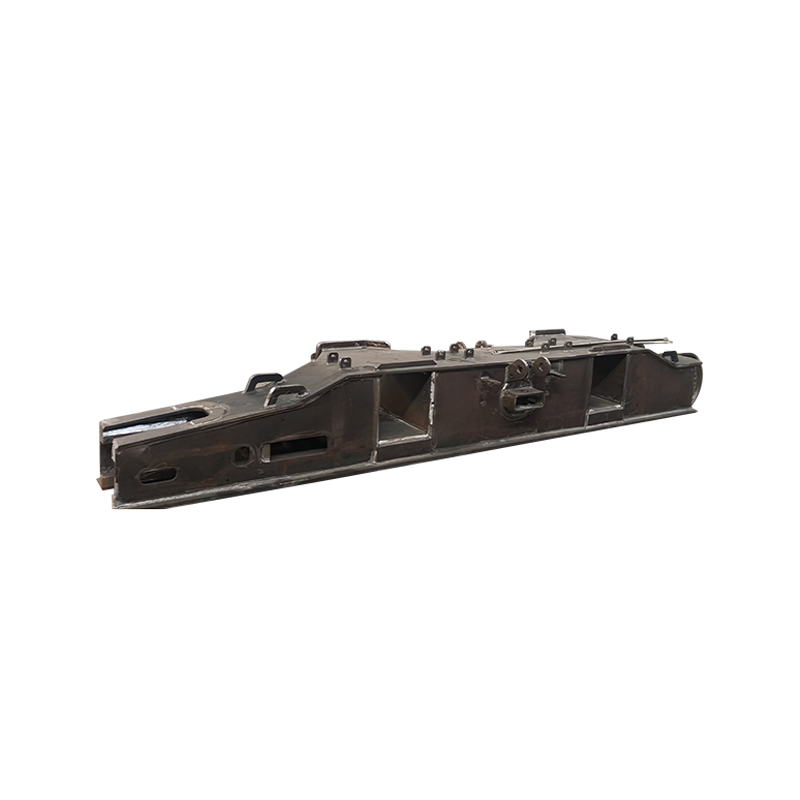
Jacking forces in trenchless construction are one of the primary structural design parameters for the entire drive system, as research in peer-reviewed pipe jacking engineering literature consistently confirms. The structural components that transmit those forces—shell, cutter head, and frame—are not areas to reduce specification in pursuit of lower unit cost. The cost of a failed component underground will always exceed what was saved at procurement.
For teams evaluating suppliers, the combination of documented quality systems, verifiable materials traceability, and experience across multiple machine types is the minimum baseline for a component that can be trusted in the ground.