 +86-573-86868360
 Inquiry
 English
 Español
 عربى
عربى

Content
- 1 1. Understanding the Role of the Boom in Excavator Stability
- 2 2. Why Carbon Steel Is Used for Excavator Boom Structural Parts
- 3 3. Structural Design Features That Support Machine Stability
- 4 4. How Structural Integrity Enhances Operational Stability
- 5 5. Fatigue Resistance and Long-Term Stability
- 6 6. Manufacturing Quality and Its Influence on Stability
- 7 7. Maintenance Practices That Preserve Stability
- 8 8. How Operators Benefit from Stable Boom Structural Parts
- 9 9. Industry Trends Improving Stability Further
- 10 Conclusion
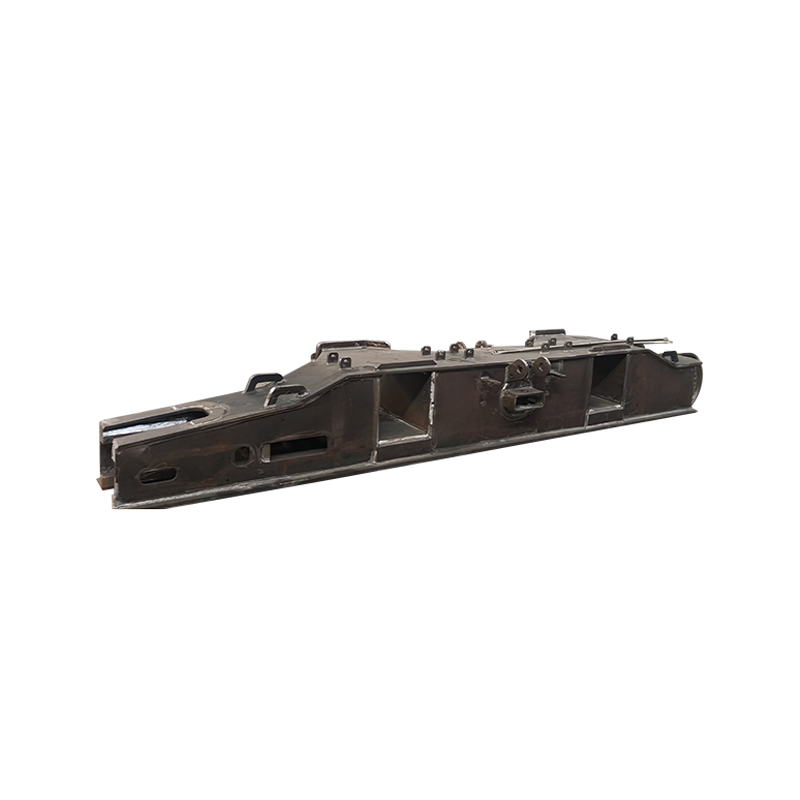
Excavators operate in environments where stability is not just a matter of performance—it is a matter of safety, durability, and long-term equipment reliability. Every digging, lifting, or swinging action generates complex forces, and the excavator structure must endure these forces while remaining controlled and predictable. Among the components that play a critical role in maintaining stability, Excavator Boom Carbon Steel Structural Parts stand out as the backbone of load-bearing performance. These structural parts form the primary interface between the excavator’s hydraulic power and the external loads it encounters, making them central to the machine’s overall balance and stability.
Understanding how these components contribute to stability is helpful not only for manufacturers and engineering professionals but also for equipment operators, fleet managers, and buyers seeking dependable machinery. This article explores the functions, material characteristics, design considerations, and long-term performance factors that explain why Excavator Boom Carbon Steel Structural Parts are essential to machine stability.
1. Understanding the Role of the Boom in Excavator Stability
Before focusing on the materials and structural parts themselves, it is important to consider the excavator boom’s functional context. The boom is responsible for transmitting hydraulic force into lifting, digging, and reach actions. It undergoes bending, torsion, impact, and vibration forces every time the machine is in use.
For stability, three aspects are critical:
-
Load Distribution:
The boom must distribute forces evenly along its length and into the excavator’s body. Poor distribution leads to tipping, surface imbalance, or overstressed joints. -
Predictable Movement:
A structurally sound boom moves smoothly without unexpected flexing or deformation. Such predictability allows the operator to perform precise movements even with heavy loads. -
Resistance to External Conditions:
Excavators regularly operate under harsh conditions—rocky terrain, slopes, soft soil, high-impact demolition sites. Boom structural parts must withstand these conditions without compromising stability.
The above functions rely heavily on the material and structural integrity of the boom. That is where Excavator Boom Carbon Steel Structural Parts play a decisive role.
2. Why Carbon Steel Is Used for Excavator Boom Structural Parts
Carbon steel remains the industry standard for excavator booms due to several inherent material advantages. Each of these factors directly links to machine stability.
2.1 Strength and Load-Bearing Capacity
Carbon steel offers high tensile strength, enabling structural parts to withstand the tremendous forces generated during excavation. This strength reduces the risk of bending or distortion, which in turn keeps the machine stable even during heavy-duty operations such as lifting large boulders or digging through dense clay.
2.2 Toughness and Impact Resistance
Excavator work is full of unexpected events—hitting buried rocks, sudden shifts in soil density, or vibration from hydraulic attachments. Carbon steel’s toughness allows boom structural parts to absorb shocks without cracking. This durability ensures that the machine maintains its stability even when subjected to impact conditions.
2.3 Excellent Weldability
Boom structural parts usually involve multiple components joined through welding. Carbon steel’s consistent weldability enables strong, reliable joints. Weak or inconsistent welds can compromise stability by causing uneven stress distribution or premature fatigue.
2.4 Adaptability to Heat Treatment
Heat treatments such as quenching, tempering, or normalizing can enhance the mechanical properties of carbon steel. Manufacturers can optimize hardness, strength, or elasticity based on specific performance requirements, ensuring the structural parts maintain stability across various duty cycles.
3. Structural Design Features That Support Machine Stability
In addition to material properties, the engineering design of Excavator Boom Carbon Steel Structural Parts significantly influences machine stability. Several design features are optimized to help manage forces, maintain balance, and ensure long-term fatigue resistance.
3.1 Reinforced Box-Shaped Sections
Most excavator booms use a box-section design, which provides:
- Increased rigidity
- Better resistance to bending
- Uniform stress distribution
- High torsional stability
This shape prevents twisting when excavators swing heavy loads or operate on uneven terrain.
3.2 Precision Machined Pin Joints
Pin holes, bushings, and joint areas experience some of the highest loads. Precision machining ensures all pin joints align correctly, avoiding uneven wear or instability during boom articulation.
A stable boom movement depends on:
- Tight tolerances
- Smooth rotation
- Reduced vibration
- Minimum clearance between moving parts
These factors contribute to better operator control and stability during complex maneuvers.
3.3 Strategic Placement of Reinforcement Plates
Reinforcement plates are added at areas where stress concentrations are likely to occur. Instead of allowing localized stress to compromise the boom’s structural behavior, these plates spread forces across a wider region, improving overall stability.
3.4 Balanced Weight Distribution
The mass distribution of the boom affects the excavator’s center of gravity. Properly designed carbon steel structural parts ensure the boom has the correct weight balance, preventing the machine from becoming front-heavy or unstable when extended.
4. How Structural Integrity Enhances Operational Stability
The structural integrity provided by Excavator Boom Carbon Steel Structural Parts helps stabilize the machine throughout different phases of operation. Below are key ways this happens.
4.1 Stability During Digging
Digging places cyclical forces on the boom: downward pressure, upward resistance, and horizontal drag. Structural parts must manage these forces without excessive flexing. Reduced flexing ensures that:
- The bucket enters the soil at the intended angle
- The machine does not sway
- Trenches are dug with consistent accuracy
If structural parts were weaker, the boom might wobble or behave unpredictably, making the excavator harder to control.
4.2 Stability During Lifting
Lifting stones, pipes, timber, or demolition debris puts immense stress on the boom. Carbon steel structural parts, with their high strength-to-weight ratio, help maintain a smooth lifting trajectory. This reduces the chance of tipping, especially when the machine is rotating with a lifted load.
4.3 Stability on Slopes and Uneven Terrain
Excavation rarely takes place on perfectly level ground. Slopes increase the risk of the excavator losing balance. Strong boom structural parts maintain rigidity, helping operators compensate for shifting load positions. This prevents sudden tilting and provides more predictable machine behavior.
4.4 Stability During Hydraulic Attachment Use
Modern excavators frequently use attachments such as:
- Hydraulic breakers
- Augers
- Grapples
- Pulverizers
These tools introduce vibration and impulse forces. Carbon steel structural parts help absorb and distribute these forces safely, minimizing excessive vibration that could destabilize the machine.

5. Fatigue Resistance and Long-Term Stability
Stability is not only about how the excavator performs in a single moment—it concerns how well it maintains performance over thousands of work cycles.
5.1 Importance of Fatigue Strength
Excavator booms endure repetitive stresses. Without strong fatigue resistance, micro-cracks can form. Carbon steel structural parts undergo precise manufacturing and heat-treatment processes that enhance fatigue strength, allowing the structure to withstand repeated loads without deteriorating.
5.2 Prevention of Deformation Over Time
Even slight deformation affects:
- Boom geometry
- Joint alignment
- Hydraulic efficiency
- Machine stability
High-quality carbon steel parts minimize long-term deformation, ensuring consistent operational performance.
5.3 Corrosion Resistance for Long-Term Stability
While carbon steel is susceptible to rust, protective coatings such as paint, primer, or zinc treatments significantly enhance resistance to environmental factors. Rust-free structural parts maintain their strength longer, supporting machine stability throughout years of operation.
6. Manufacturing Quality and Its Influence on Stability
The stability provided by Excavator Boom Carbon Steel Structural Parts does not rely only on design or material. The precision of manufacturing processes also matters.
6.1 Cutting and Forming Accuracy
Laser cutting, CNC machining, and controlled forming techniques ensure that:
- Structural components fit together accurately
- Stress paths follow engineered design
- No weak points are introduced during fabrication
Accuracy reduces the risk of stress imbalances that could compromise stability.
6.2 High-Quality Welding Techniques
Weld integrity is critical. Common defects such as porosity, undercutting, or lack of fusion can lead to structural failure. High-standard welding ensures the boom remains stable during high-load applications.
6.3 Inspection and Testing
To validate stability performance, manufacturers typically conduct:
- Ultrasonic testing
- Magnetic particle inspection
- Fatigue testing
- Dimensional inspection
- Load simulation tests
These evaluations confirm that structural parts can reliably maintain stability in real-world conditions.
7. Maintenance Practices That Preserve Stability
Even the strongest boom structural parts require routine maintenance to sustain performance.
7.1 Regular Visual Inspections
Operators should routinely inspect for:
- Cracks
- Unusual wear
- Rust or coating damage
- Weld seam deformation
Early detection prevents small issues from escalating into stability risks.
7.2 Lubrication of Joints
Proper lubrication reduces friction and ensures smooth boom movements. This prevents jerky motion that could destabilize the excavator.
7.3 Monitoring Pin and Bushing Wear
Worn bushings create extra clearance at joints, causing the boom to wobble under load. Timely replacement keeps articulation precise and stable.
7.4 Re-coating for Corrosion Protection
Maintaining protective coatings extends the life of carbon steel structural parts and keeps them performing reliably.
8. How Operators Benefit from Stable Boom Structural Parts
The stability provided by well-engineered Excavator Boom Carbon Steel Structural Parts enhances operator safety, efficiency, and confidence.
8.1 Safer Operation
A stable boom reduces:
- The risk of tipping
- Sudden machine movement
- Overloading accidents
This is especially important on crowded construction sites.
8.2 Improved Precision
When the boom moves predictably, operators can perform detailed tasks—fine grading, trench shaping, lifting placement—with greater accuracy.
8.3 Reduced Operator Fatigue
Stable machines require fewer corrective actions. Operators can maintain productivity longer with less strain.
9. Industry Trends Improving Stability Further
Recent developments aim to push stability performance even further:
- Use of higher-grade carbon steel alloys
- Automated welding for consistent joints
- Finite element analysis (FEA) for optimized stress distribution
- Anti-corrosion coating advancements
- Precision robotic machining for tight tolerances
These innovations contribute to stronger, more stable excavator boom structures.
Conclusion
Excavator Boom Carbon Steel Structural Parts play an essential role in machine stability through their material characteristics, structural design, manufacturing quality, and long-term fatigue resistance. They ensure that excavators remain balanced and predictable regardless of load conditions, terrain, or operational stresses. For equipment owners, operators, and engineers, understanding how these parts support stability helps with better machinery selection, safer operation, and more effective maintenance planning.