 +86-573-86868360
 Inquiry
 English
 Español
 عربى
عربى

Content
- 1 Load Path Mapping in Crusher Frames
- 2 Material Grade Selection Beyond Generic Carbon Steel
- 3 Stress Relief and Distortion Control in Welded Frames
- 4 Pitman Design and Bearing Seat Integrity
- 5 Impact of Structural Part Failure on Production
- 6 Optimizing Fastener Tension in Assembly
- 7 Dynamic Balancing of the Jaw Stock Assembly
- 8 Corrosion Protection for Steel Structures
Load Path Mapping in Crusher Frames
The crushing force in a double-toggle jaw crusher can exceed 400 Mpa at the toggle seats. This immense pressure travels through the swing jaw, into the toggle plates, and ultimately grounds into the main carbon steel frame. If the load path is not continuous, stress localizes at sharp corners, creating fracture initiation sites.
A practical solution is the use of finite element analysis for topology optimization. For instance, adding generous radii at the intersection of the side plates and the rear frame wall can reduce stress concentration factors by 30% to 40%. The structural frame should not just be a box; it must function as a tuned spring that deflects slightly without permanent deformation.
Material Grade Selection Beyond Generic Carbon Steel
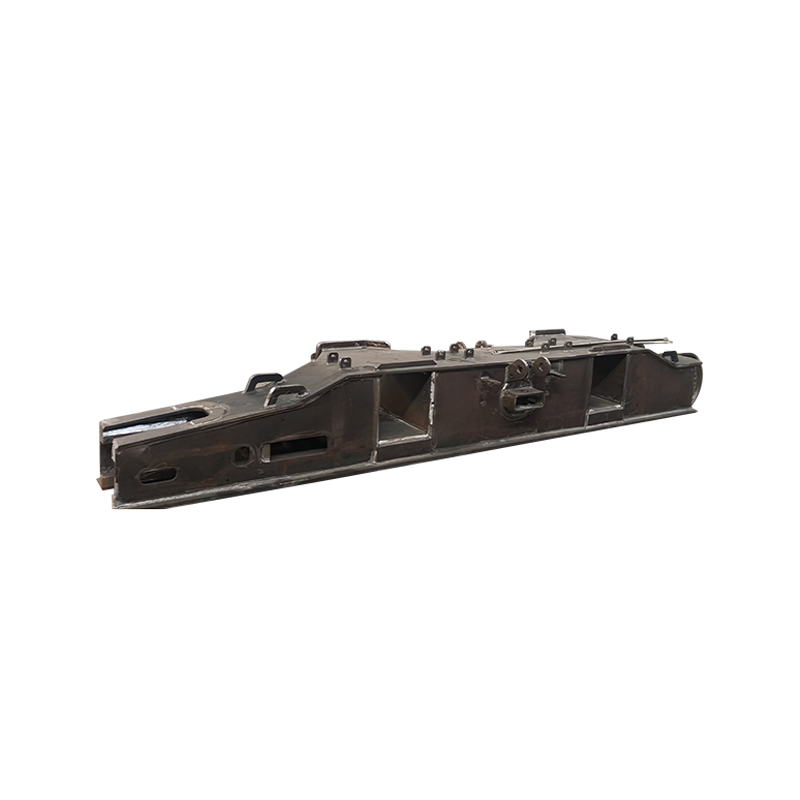
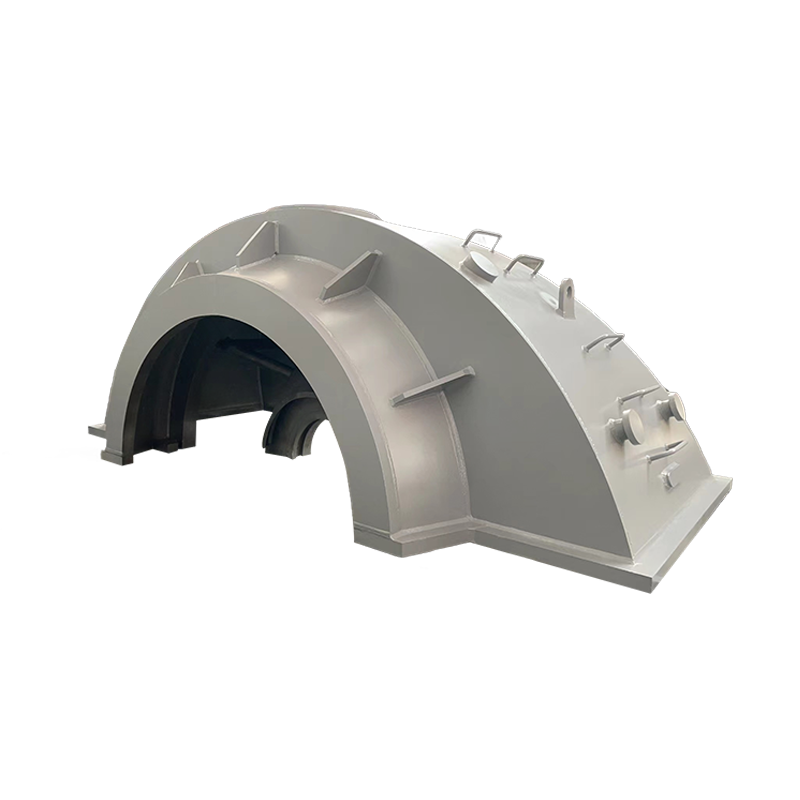
Specifying “carbon steel” is vague and dangerous. Jaw Crusher Carbon Steel Structural Parts in modern crushers predominantly use weldable cast or forged grades with specific yield strengths. The goal is to balance strength with ductility to absorb shock loads without brittle fracture.
| Material Grade | Yield Strength (MPa) | Application Zone |
|---|---|---|
| ASTM A27 Grade 70-36 | 240 | Cast steel pitman bodies |
| ASTM A36 Modified | 250+ | Welded side plate assemblies |
| Low Alloy High Strength | 345-450 | High-stress bearing housings |
Using a low-alloy, high-strength steel like a normalized S355 or similar structural grade for the main plates allows for thinner, lighter sections without sacrificing load-bearing capacity. This directly reduces the dead weight and dynamic forces on the foundation.
Stress Relief and Distortion Control in Welded Frames
The most common fabrication method for jaw crusher chassis involves heavy gas metal arc welding of thick carbon steel plates. The heat-affected zone is a critical vulnerability. Without proper post-weld treatment, residual tensile stress can reach the yield point of the base material, drastically accelerating corrosion fatigue.
Thermal stress relief is non-negotiable. Heating the entire welded assembly to roughly 600°C and allowing a slow, controlled cooling cycle removes the locked-in stresses from welding. Skipping this step to cut costs often results in cracks appearing within the first 6 to 12 months of operation, particularly at the junction of the cheek plates and the main bearing housing.
Pitman Design and Bearing Seat Integrity
The pitman is the heart of the movable jaw assembly. It is typically a carbon steel casting or a fabricated box section. Its primary failure mode is not breakage but fretting and wear at the bearing seats. Once the interference fit between the bearing outer race and the pitman bore is lost, micromovement begins.
This can be mitigated by specifying a tighter interference fit, typically 0.05 to 0.10 mm of negative clearance depending on the bore diameter. Furthermore, the pitman must be stiff enough longitudinally to prevent bending deflection. A deflection greater than 0.5 mm at the center of the bearing span can induce edge loading on the spherical roller bearings, reducing their calculated life by over 50%.
Impact of Structural Part Failure on Production
A crack in a carbon steel structural component is exponentially more disruptive than wear part replacement. Replacing a toggle plate takes minutes, but welding a crack in the main frame is a temporary fix that often requires complete machine teardown for proper re-machining later.
Consider the cost implications
- Direct repair cost includes skilled welders, non-destructive testing, and field machining.
- Indirect costs from lost production typically range from $5,000 to $15,000 per hour in large quarry operations.
- Catastrophic frame failure can misalign the entire drive system, damaging the expensive eccentric shaft and flywheels.
Regular visual inspections focusing on the four corners of the frame discharge zone are critical. A dye penetrant test every 2,000 operating hours can detect micro-cracks before they propagate to critical length.
Optimizing Fastener Tension in Assembly
While the discussion centers on carbon steel parts, the bolted connections holding these structures together are the most common failure points. Hydraulic torque wrenches must be used on the saddle block mounting bolts.
Progressive torque application
Applying the full torque in a single step causes unequal gasket compression. The correct method involves three stages: 30%, 60%, and 100% of the final torque value, following a cross-pattern sequence.
Bolt stretch verification
Ultrasonic bolt meters provide the most accurate measurement of preload. Simply measuring torque is unreliable due to friction variables in the threads, which can consume up to 50% of the torque input.
Dynamic Balancing of the Jaw Stock Assembly
The swing jaw is a carbon steel casting subjected to massive reciprocating forces. An unbalanced jaw assembly generates oscillating inertia forces that shake the entire structure. While the flywheels counteract torsional vibration, the linear shaking forces must be minimized through design symmetry.
Using counterweights cast integrally into the flywheels or bolted to the flywheel rims, matched to approximately 50% of the reciprocating mass, transforms the force vector from a destructive horizontal slam into a more manageable rotary motion. This significantly extends the fatigue life of the frame anchor bolts and grouting.
Corrosion Protection for Steel Structures
In mining environments, corrosion combined with cyclic stress causes failure at a rate much faster than either factor alone. A proper coating system is part of the structural integrity of the carbon steel.
A high-build epoxy primer with a minimum dry film thickness of 75 microns, followed by a 50-micron polyurethane topcoat, provides a barrier against acidic water. Special attention must be paid to the internal pockets behind the cheek plates where wet dust accumulates and dries cyclically, creating a highly corrosive environment that attacks the weld seams from the inside. Drainage holes placed at the correct low points are an essential design feature.