 +86-573-86868360
 Inquiry
 English
 Español
 عربى
عربى

Content
- 1 Understanding the Load Environment in Mining Applications
- 2 Material Selection for Structural Steel Components
- 3 Fatigue Design and Weld Detailing
- 4 Structural Design Principles for Heavy-Duty Mining Equipment
- 5 Corrosion and Wear Interaction on Structural Integrity
- 6 Inspection Intervals and Non-Destructive Testing Methods
- 7 Repair Welding Procedures for Cracked Components
- 8 Weight Reduction and Structural Optimization
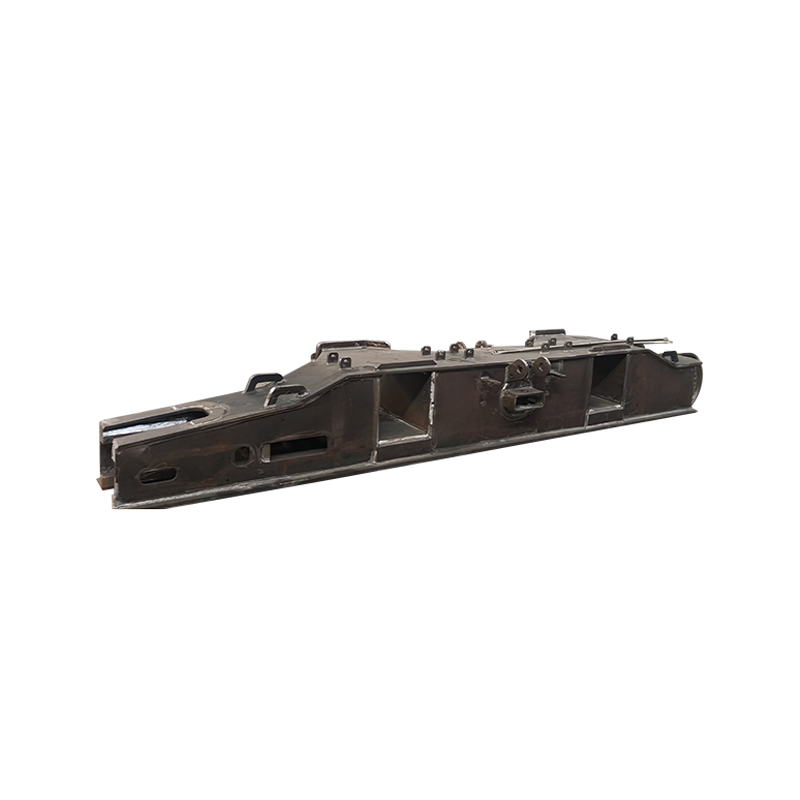
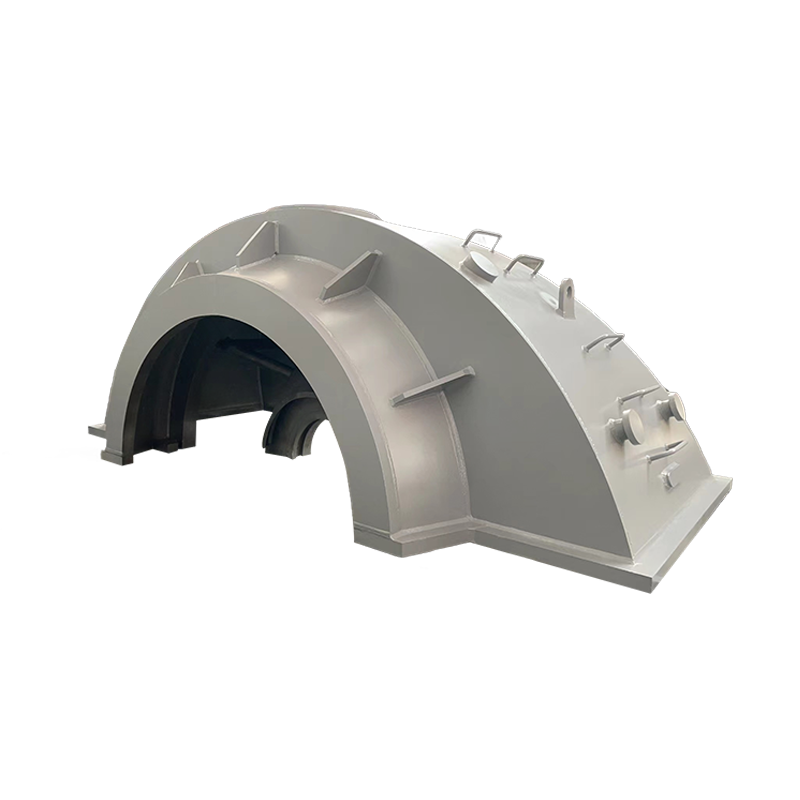
Steel structure components in mining machinery rarely fail from a single overload event. The overwhelming majority of failures trace back to cumulative fatigue cracking at stress concentration points, often accelerated by improper weld detailing or underestimated dynamic loads. Addressing this at the design and fabrication stage—through calculated fatigue life assessments, correct material grade selection, and post-weld treatment—extends component service life by a factor of three to five times compared to unreinforced, conventionally welded assemblies. The following sections examine how material metallurgy, structural geometry, and maintenance protocols combine to determine whether a boom, frame, or chassis survives beyond its design life or fractures prematurely underground.
Understanding the Load Environment in Mining Applications
Mining machinery steel structures operate under conditions that differ fundamentally from those in general construction or industrial equipment. A single haul truck frame may endure over 50,000 load cycles per year, with peak stresses repeatedly approaching yield strength during loading and dumping sequences. Excavator booms experience fully reversed bending stresses as the bucket digs through heterogeneous rock formations, where resistance can fluctuate by 300 percent within a single pass.
Key load characteristics that dominate the design of structural steel components in mining include:
- High-amplitude cyclic loading with irregular frequency patterns
- Multi-axial stress states caused by torsion combined with bending
- Impact loads from boulder strikes and underfoot blasting vibrations
- Thermal stress gradients when equipment moves between surface and deep underground environments
- Corrosive-abrasive wear from slurry, dust, and acidic mine water interacting with stressed surfaces
Conventional static analysis using a single safety factor fails to capture these realities. Finite element models must incorporate transient dynamic simulations that account for bucket payload variability, ground unevenness, and operator-induced shock loads. Field strain gauge measurements on operating dragline booms have recorded stress spikes up to 85 percent of nominal yield during routine swing-and-dump cycles, underscoring how narrow the margin between design assumptions and operational reality can be.
Material Selection for Structural Steel Components
Selecting the correct steel grade for a mining machinery structure is a balancing act among strength, toughness, weldability, and cost. High-strength low-alloy (HSLA) steels dominate modern designs, but the specific grade must match the component function. A haul truck chassis rail demands excellent fatigue resistance and weldability, while a crusher jaw frame prioritizes abrasion resistance and impact toughness.
| Steel Grade | Yield Strength (MPa) | Typical Application | Key Characteristic |
|---|---|---|---|
| S355 / ASTM A572 Grade 50 | 355 | Conveyor support frames, secondary structures | Good weldability, widely available |
| Q460 / S460 | 460 | Excavator undercarriage frames, loader arms | Improved strength-to-weight ratio |
| Q690 / S690QL | 690 | Haul truck chassis, crane booms | High strength, requires preheating |
| Wear-resistant AR400 / AR500 | 1000-1250 (hardness-focused) | Crusher bodies, chute liners, bucket shells | Exceptional abrasion resistance, limited weldability |
Impact toughness at sub-zero temperatures is a critical selection criterion for equipment operating in surface mines at high altitudes or in arctic regions. Charpy V-notch tests at -40 degrees Celsius with minimum absorbed energy of 27 Joules are a standard specification for primary structural elements in these environments. Steels that meet this requirement while maintaining yield strengths above 500 MPa typically contain microalloying additions of niobium and vanadium, which refine grain structure and improve low-temperature ductility without compromising strength.
Fatigue Design and Weld Detailing
Welded joints are the dominant locations for fatigue crack initiation in mining machinery steel structures. Research examining over 200 field failures of heavy equipment frames found that 87 percent of cracks originated at weld toes or weld terminations. The geometry of the weld profile, rather than the base metal strength, controls fatigue life in these connections.
Weld Toe Grinding and Profile Control
Grinding weld toes to a smooth radius of at least 3 millimeters can improve fatigue strength by 30 to 60 percent according to the International Institute of Welding fatigue design recommendations. This technique removes microscopic undercut defects and creates a gradual transition between the weld metal and base plate, reducing the stress concentration factor from approximately 2.5 to below 1.5.
Post-Weld Heat Treatment
Residual tensile stresses from welding can approach the yield strength of the base metal, effectively reducing the applied stress range that causes fatigue damage to zero—meaning the component cycles from yield downward rather than from a neutral state. Post-weld stress relief at 580 to 620 degrees Celsius for one hour per 25 millimeters of plate thickness reduces these residual stresses by up to 80 percent, shifting the mean stress toward compression and dramatically extending fatigue crack initiation life.
Structural Design Principles for Heavy-Duty Mining Equipment
Effective structural design for mining machinery follows several empirically validated principles that distinguish durable fabrications from those prone to early failure. These principles apply across equipment types, from underground roof bolters to surface mining draglines.
- Stiffness path continuity – Abrupt changes in section modulus create stress risers. Transitions between thick and thin plates should follow a taper ratio of at least 1:4, meaning a 20mm thickness change is spread over an 80mm length.
- Load path alignment – Welds should be positioned parallel to primary stress trajectories. Transverse welds on tension flanges reduce fatigue strength by up to 40 percent compared to longitudinal fillet welds carrying the same load magnitude.
- Redundancy in critical joints – Box-section designs with internal diaphragms spaced at two to three times the section depth prevent local buckling and provide alternate load paths if a single weld line develops cracks.
- Avoidance of weld clusters – Intersecting welds from three or more directions create triaxial tensile stress states that embrittle the heat-affected zone. Staggering weld terminations by at least 50 millimeters disperses these residual stress peaks.
- Buckling resistance in thin-web sections – Web panels in fabricated box girders should have stiffener spacing not exceeding 1.5 times the web depth for sections expected to cycle into the plastic range during severe loading events.
Corrosion and Wear Interaction on Structural Integrity
Mining environments combine mechanical abrasion with chemical corrosion in a synergistic degradation mechanism. Slurry composed of fine mineral particles and acidic water with pH values as low as 2.5 can remove protective oxide layers from steel surfaces, exposing fresh metal to both corrosive attack and accelerated abrasive wear. This combined effect can increase material loss rates by a factor of three to eight compared to either mechanism acting alone.
Sacrificial wear plates are a standard countermeasure on excavator buckets and crusher housings, but their attachment details require careful engineering. Bolted wear liners allow for field replacement without introducing the heat-affected zones that welded liners create, preserving the fatigue properties of the underlying structural plate. When welding is unavoidable for liner attachment, intermittent fillet welds with maximum 100mm segments and 200mm spacing minimize continuous heat input while still securing the liner against peel-off forces during operation.
Inspection Intervals and Non-Destructive Testing Methods
Structured inspection programs directly correlate with reduced catastrophic structural failures. Mining operations that implement quarterly magnetic particle inspections of all primary weld lines report 60 percent fewer unplanned structural repairs compared to operations relying on visual inspection alone.
| Inspection Method | Defect Type Detected | Recommended Interval | Access Requirement |
|---|---|---|---|
| Magnetic Particle Testing (MT) | Surface and near-surface cracks | Every 500-750 operating hours | Local paint removal required |
| Ultrasonic Testing (UT) | Internal flaws, laminations, weld root cracks | Every 2000 hours or annually | Couplant application surface |
| Phased Array UT | Complex geometry weld defects | Major overhauls | Skilled technician required |
| Dye Penetrant Testing | Surface-breaking cracks | Supplementary spot checks | Clean, dry surface |
Criticality-based inspection scheduling assigns components to tiers based on the consequence of failure. Primary structures such as boom pivot zones and chassis main rails are designated Tier 1, requiring the shortest inspection intervals and full documentation of findings. Secondary structures like handrails and access platforms fall under Tier 3, where annual visual inspection suffices. This tiered approach allocates inspection resources proportionally to structural risk, avoiding both over-inspection of low-risk items and under-inspection of fatigue-critical zones.
Repair Welding Procedures for Cracked Components
When fatigue cracks are detected in mining machinery steel structures, the repair sequence significantly influences whether the repair lasts or the crack recurs within months. A documented study of 120 repair welds on haul truck frames demonstrated that cracks repaired with full crack excavation, preheat, and controlled cooling had a recurrence rate of only 8 percent over two years, while cracks repaired with simple overwelding without excavation recurred at a rate of 62 percent.
The proven repair sequence follows these steps:
- Drill crack arrest holes at 6 to 8 millimeters diameter located precisely at each visible crack tip to prevent propagation during excavation
- Gouge or grind out the entire crack profile to sound metal, verified by dye penetrant testing
- Preheat the repair zone to 150 to 200 degrees Celsius for HSLA steels, maintaining this temperature throughout welding
- Fill the excavation using low-hydrogen electrodes with maximum 4mm diameter to control heat input per pass
- Peen each weld pass lightly while still hot to induce compressive residual stress
- Perform post-repair heat treatment or at minimum slow-cool under insulation blankets
- Conduct magnetic particle inspection of the repair and surrounding heat-affected zone before returning to service
Weight Reduction and Structural Optimization
Reducing the structural weight of mining machinery directly improves payload capacity, fuel efficiency, and ground pressure distribution. Topology optimization algorithms applied to an excavator boom design achieved a 17 percent weight reduction while maintaining equivalent fatigue life, simply by redistributing material from low-stress regions to reinforce high-stress nodes identified through finite element analysis.
High-strength steels enable thinner plate sections, but two constraints limit weight reduction potential. First, deflection limits often govern design before strength limits are reached—a thinner boom section may still meet yield criteria but deflect excessively under load, compromising digging accuracy. Second, minimum plate thicknesses of approximately 8 to 10 millimeters are required to resist impact puncture from rock strikes, regardless of calculated stress levels. Practical weight optimization therefore targets the 15 to 25 percent range for most mining machinery structures, beyond which stiffness and durability penalties outweigh the payload benefits.