 +86-573-86868360
 Inquiry
 English
 Español
 عربى
عربى

Content
- 1 Why Generic Carbon Steel Falls Short in Energy Applications
- 2 Wear-Resistant Components: Where They Go and Why Grade Matters
- 3 Welded Structure Components: Fabrication is the Critical Variable
- 4 The Scale Context: Why Sourcing Standards Are Tightening
- 5 Practical Checklist: Qualifying a Supplier for Energy-Sector Steel Components
- 6 The Bottom Line for Procurement Teams
Steel makes up roughly 85% of every wind turbine ever built — tower sections, nacelle frames, yaw rings, bearing housings, and the structural interfaces holding the drivetrain together. Yet most procurement failures in wind energy projects don't start with rotating parts. They start earlier, with the wrong energy industry steel structure component specified, sourced from a supplier who never had to operate one in the field.
This guide breaks down what actually matters when selecting carbon steel structural components for wind power and broader energy applications — the material logic, fabrication requirements, and the performance gaps that cause premature failures.
Why Generic Carbon Steel Falls Short in Energy Applications
Wind turbines are among the most mechanically aggressive environments a structural component can inhabit. Cyclic bending loads, variable wind-induced torsion, temperature swings, and constant exposure to airborne particulates — all simultaneously. Standard structural steel (S235, A36) grades are designed for static or mildly dynamic loads. They are not built for decades of combined abrasive and fatigue stress.
This is precisely why energy-sector components require steel formulations engineered for specific failure modes. There are two dominant categories in wind power applications:
- Wear-resistant grades — used in areas subject to friction, particulate impact, or sliding contact (yaw systems, pitch interfaces, exposed mounting brackets). These alloys maintain dimensional integrity despite sustained surface abrasion.
- Weld-optimized structural grades — used for large-format load-bearing geometries such as tower transition sections, nacelle frames, and foundation flanges. These prioritize consistent carbon equivalent values to support high-quality weld joints without hydrogen-induced cracking.
Specifying the wrong category — using a wear-resistant grade where weldability is required, or vice versa — is one of the most common and expensive sourcing errors in the industry.
Wear-Resistant Components: Where They Go and Why Grade Matters
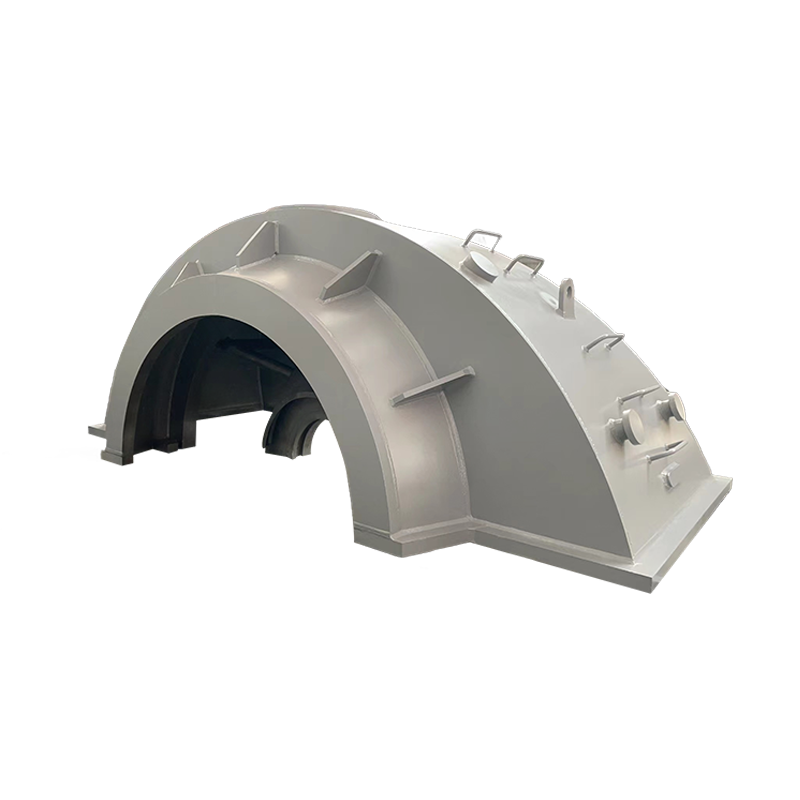
The wear-resistant carbon steel structure components for wind turbine equipment serve as critical structural elements in areas where abrasive contact is unavoidable: yaw and pitch drive interfaces, bearing housings, and structural mounting points in the nacelle where mechanical friction and environmental particulates converge.
The key performance requirement is not just initial hardness — it is sustained dimensional stability under long-cycle abrasive loading. A component that loses material thickness by 0.3 mm annually in a yaw ring interface may seem trivial. Over a 20-year turbine life, it translates to misalignment, increased load on adjacent components, and eventual unplanned shutdown. Hardness alone does not predict wear performance; alloy composition, heat treatment consistency, and surface finish specification all determine real-world outcome.
Welded Structure Components: Fabrication is the Critical Variable
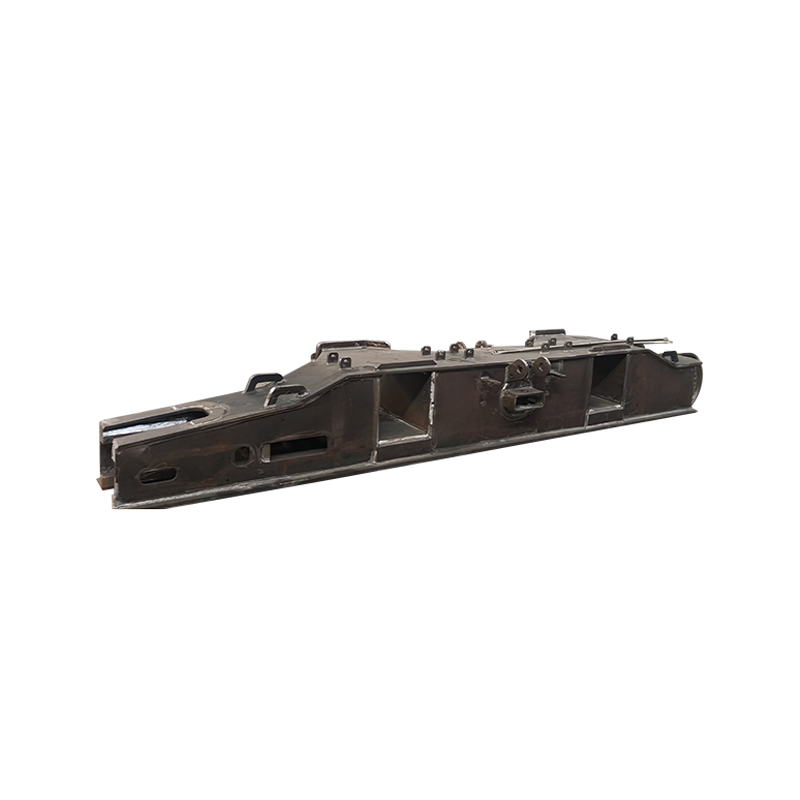
For large structural assemblies — tower sections, nacelle base frames, foundation transition rings — the defining variable is not the base steel grade alone. It is the fabrication process. Welded structure carbon steel components for wind power equipment are fabricated using controlled processes (submerged arc welding, gas-shielded welding) with mandatory pre-weld and post-weld heat treatment. Each step exists to prevent one specific failure mode: hydrogen-induced cold cracking at weld toe regions, which is the primary cause of fatigue crack initiation in wind energy structural assemblies.
Validation requirements are equally non-negotiable. Competent suppliers apply:
- Magnetic particle testing (MPT) for surface and near-surface weld defect detection
- Ultrasonic testing (UT) for internal discontinuity identification in thick-section welds
- Dimensional verification via fixture-based assembly and post-weld machining to maintain geometric tolerances
- Full-scale fatigue testing against operational loading spectra, not just static proof loads
Any supplier unable to provide documented NDE (non-destructive examination) records for welded structural components should be disqualified from wind energy sourcing discussions.
The Scale Context: Why Sourcing Standards Are Tightening
Global wind capacity is expected to nearly double to over 2,000 GW by 2030, with wind accounting for almost a third of all renewable electricity growth, according to the International Energy Agency's wind energy outlook. Onshore installations will represent roughly 85% of new capacity. A single onshore turbine requires approximately 140 metric tons of steel; an offshore unit can require up to 750 metric tons. As turbine sizes scale up (10–15 MW platforms becoming standard offshore), the structural demands on individual components scale proportionally.
This volume growth is forcing procurement teams to raise the bar on supplier qualification. The tolerance for field failures is shrinking as O&M costs on larger turbines are higher and replacement windows are narrower. Components that passed qualification under older, smaller turbine load cases may not be fit-for-purpose under next-generation designs.
Practical Checklist: Qualifying a Supplier for Energy-Sector Steel Components
Before committing to a structural component supplier for wind or broader energy applications, verify the following:
- Material traceability — heat certificates linked to each batch, with verified chemical composition and mechanical properties against specification
- Welding procedure qualification — documented WPS/PQR records aligned to applicable standards (EN 15614, AWS D1.1, or equivalent)
- NDE capability — in-house or third-party UT and MPT with calibration records; radiographic testing for critical weld zones
- Fatigue-aware design — evidence that joint geometry and section profiles have been reviewed for stress concentration factor (Kt) compliance
- Corrosion protection system — coating system qualification appropriate for the target exposure category (C3–C5M per ISO 12944 for most wind applications)
Suppliers with experience across multiple heavy-industry segments — including high-precision components for steam turbine systems — typically demonstrate better dimensional control and NDE discipline than wind-only specialists, because turbine and power plant standards set a higher fabrication floor.
The Bottom Line for Procurement Teams
Steel structural components are not interchangeable commodities in energy applications. The difference between a wear-optimized alloy and a weld-optimized structural grade is not marketing — it is a materials science decision that determines whether a component meets its 20-year design life or triggers an unplanned maintenance event at year six. Specify by failure mode. Qualify by process documentation. And treat NDE records as a minimum, not a bonus.
For wind turbines specifically, the structural demands will only increase as the industry builds larger, installs deeper offshore, and extends design life targets beyond 25 years. The components you specify today need to be engineered for where the industry is going, not where it has been.