 +86-573-86868360
 Inquiry
 English
 Español
 عربى
عربى

Content
- 1 Why Steel Structures Determine Testing Accuracy
- 2 Non-Standard Design and Production Challenges
- 3 Material Choices That Withstand High Loads and Temperature Swings
- 4 Inspection Protocols That Guarantee Fit and Function
- 5 Full-Scale Pre-Assembly and Efficient Delivery
- 6 A Trusted Partner in Aerospace Steel Solutions
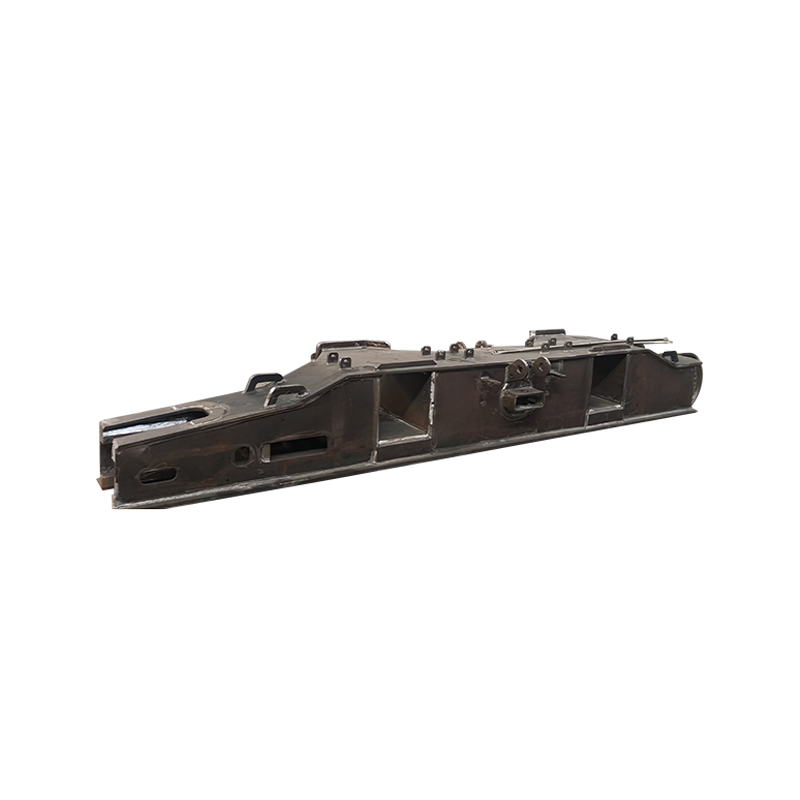
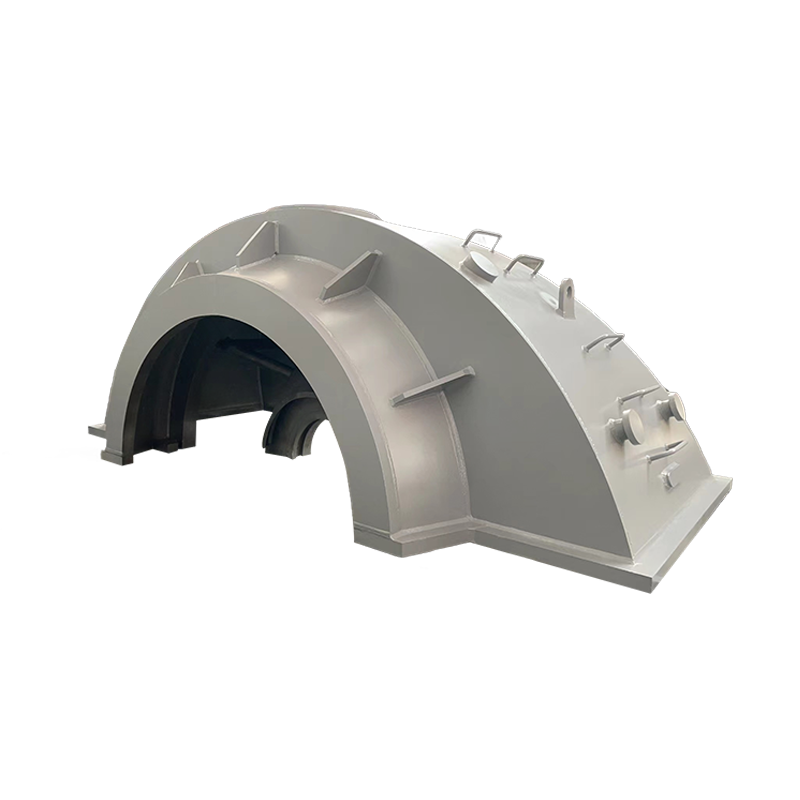
Precision steel structure components are the silent foundation of every reliable aerospace test facility and manufacturing cell. Without dimensionally stable, high-rigidity frameworks, wind tunnels, engine test stands, and flight simulators cannot produce repeatable, safety-critical data. Zhejiang Fulunde Heavy Industry Co., Ltd. specializes in fabricating these non-standard steel structures, combining deep engineering know-how with advanced production and inspection capabilities to deliver components that meet the extreme demands of the aerospace industry.
Why Steel Structures Determine Testing Accuracy
Aerospace testing equipment must replicate real-world flight and operating conditions with minimal deviation. A wind tunnel’s steel contraction cone, diffuser, and test section, for example, require geometric tolerances within ±0.5 mm over spans exceeding 10 meters. Even minor warping caused by thermal stress or residual vibration can distort airflow and invalidate aerodynamic measurements. Engine test stands present an even more demanding scenario: a steel base frame must securely hold a powerplant generating tens of thousands of pounds of thrust while keeping the engine precisely aligned with multi-axis force sensors. Any micro-movement leads to measurement drift. Fulunde Heavy Industry addresses these challenges through rigid welding procedure qualifications, post-weld stress relief, and machined mounting surfaces that guarantee long-term geometric stability.
Non-Standard Design and Production Challenges
By definition, non-standard steel components are one-off or low-volume assemblies with unique geometries, complex joint configurations, and tightly integrated instrumentation features. A single project for a flight simulator motion platform recently required a base frame with 1,200 bolt holes positioned within 0.2 mm of true center. Achieving this level of precision demands CNC machining after welding and full stress-relief annealing to lock in dimensional accuracy.
Fulunde’s 20,000-square-meter factory houses large-capacity boring mills, high-definition plasma cutting tables capable of processing plate up to 80 mm thick, and heavy-lift overhead cranes. The integrated design-to-manufacturing workflow eliminates translation errors between engineering and the shop floor, reducing lead times while ensuring that every bracket, stiffener, and interface plate aligns with the assembly sequence. For a recent wind tunnel structure, the company delivered over 45 tonnes of fabricated steel that assembled on-site with zero rework, a result of meticulous 3D modeling and pre-assembly at the factory.
Material Choices That Withstand High Loads and Temperature Swings
Steel grade selection directly influences structural integrity and safe operating life. For ambient-temperature test rigs and manufacturing support structures, Q345B low-alloy structural steel offers a minimum yield strength of 345 MPa combined with excellent weldability. When components are exposed to cryogenic fluids or extreme temperature cycles, stainless steel grades such as 304L become essential to prevent brittle fracture at temperatures down to -196°C.
All raw material is sourced from ISO-certified mills and accompanied by full material certifications. Typical certification packages include chemical analysis, tensile test results, and Charpy V-notch impact values. Key material properties considered during design are summarized below.
- Q345B: minimum yield 345 MPa, impact tested at 20°C, excellent for welded subframes
- A572 Grade 50: high strength-to-weight ratio, used in bolted assemblies and elevated-temperature zones
- 304L stainless: superior corrosion resistance, retained toughness at cryogenic temperatures
Traceability is non-negotiable. Each steel plate and section is marked with its heat number and tracked from receipt through cutting, welding, and final inspection, giving aerospace customers full visibility into the provenance of every load-bearing element.
Inspection Protocols That Guarantee Fit and Function
Non-destructive testing and dimensional verification are embedded in every stage of production. Welds are inspected according to customer specifications, with acceptance criteria derived from international standards. The table below shows the primary methods applied to aerospace industry steel structure components.
| Method | Defect Detected | Acceptance Standard |
|---|---|---|
| Ultrasonic Testing (UT) | Internal cracks, laminations | ISO 17640 Class B |
| Magnetic Particle Testing (MT) | Surface and near-surface flaws | ISO 17638 |
| Dye Penetrant Testing (PT) | Surface-breaking discontinuities | ISO 3452-1 |
| Laser Tracker Measurement | Dimensional deviations | ±1 mm over 20 m |
Fulunde utilizes laser trackers and portable coordinate measuring arms to verify that large-scale assemblies conform to the design model. Achieving ±1 mm overall length accuracy on structures up to 20 meters is now standard practice, ensuring that mating components from different suppliers fit perfectly upon final integration.
Full-Scale Pre-Assembly and Efficient Delivery
Every major steel structure undergoes a complete trial assembly at Fulunde’s facility before surface treatment and shipping. This step validates bolt-hole alignment, interface flatness, and overall geometric conformity, eliminating costly on-site rework. Modular designs are broken down into transportable sections, shop-primed or finished with high-durability coating systems, and packed for export.
The company’s location in the Haiyan Economic Development Zone, within the Yangtze River Delta, provides direct access to Shanghai’s world-class port infrastructure and integrated supply chains. The 120 million yuan investment in heavy lifting equipment and CNC machinery supports handling of assemblies up to 50 tons, making it possible to fabricate and ship complete test stand foundations or wind tunnel shell segments as single, ready-to-install modules.
A Trusted Partner in Aerospace Steel Solutions
Since its establishment in 2017, Fulunde Heavy Industry has built a reputation as a reliable OEM for aerospace-grade steel structure components. By offering in-house design, advanced welding and machining, certified NDT services, and global logistics support, the company helps testing laboratories and aero-engine manufacturers shorten commissioning times and ensure data integrity. Each project begins with a detailed manufacturability review and ends with a comprehensive data book documenting all material certificates, inspection reports, and dimensional records.
For demanding applications where structural precision is a prerequisite for test validity, partnering with a manufacturer that understands both the metallurgy and the mission is the surest way to achieve consistent, repeatable outcomes. The combination of regional manufacturing advantages, heavy fabrication capacity, and a quality-first culture makes Fulunde an informed choice for non-standard aerospace steel structures.