 +86-573-86868360
 Inquiry
 English
 Español
 عربى
عربى

Content
- 1 A Direct Path to Project Certainty
- 2 Why Precision in Steel Structure Components Matters
- 3 The Integrated Facility Model from Design to Delivery
- 4 Strategic Location in the Yangtze River Delta
- 5 Material Selection for Optimal Structural Performance
- 6 Non-Standard Component Expertise for Complex Projects
- 7 Quality Assurance That Protects Project Schedules
- 8 Long-Term Value and Construction Efficiency
A Direct Path to Project Certainty
Choosing a specialized OEM manufacturer for steel structure components is the most effective way to secure structural integrity, meet strict project timelines, and control costs. A partner that combines in-house design, precision fabrication, and consistent service removes the coordination gaps that often delay construction. Every beam, column, and connection detail performs as intended when engineering and manufacturing work together seamlessly.
Why Precision in Steel Structure Components Matters
construction industry steel structure component form the skeleton of industrial buildings, warehouses, commercial centers, and high-rise frames. Even small dimensional deviations multiply across hundreds of connections, leading to fit-up problems that erode both schedule and safety margins. A facility that maintains dimensional tolerances within ±1 mm on critical interfaces can reduce on-site assembly time by up to 25 percent, based on project data from mid-size industrial builds.
Precision also directly affects load transfer. Misaligned bolt holes or out-of-square end plates create stress concentrations that compromise fatigue life. Modern CNC cutting lines and robotic welding cells, combined with rigorous post-weld inspection, ensure that every component meets the design intent without deviation.
The Integrated Facility Model from Design to Delivery
A medium-sized high-tech enterprise established in 2017 with a total investment of 120 million yuan and a production area of 20,000 square meters demonstrates the power of vertical integration. Located in the Economic Development Zone of Haiyan County, Jiaxing City, Zhejiang Province, the facility integrates design, manufacturing, sales, and service under one roof. This model eliminates information loss between engineering and the shop floor.
In-house capabilities include:
- Detailed 3D modeling and structural detailing
- CNC plasma and laser cutting for complex profiles
- Submerged arc welding and multi-axis robotic welding
- Shot blasting and multi-layer protective coating systems
- Pre-assembly and dimensional verification before shipment
By controlling every process step, the manufacturer can deliver project-specific packages that arrive on site ready to erect, with matching documentation and full traceability.
Strategic Location in the Yangtze River Delta
The facility sits at the core of the Yangtze River Delta Economic Zone, with Shanghai as the regional leader. This position provides immediate access to an advanced industrial system, a deep pool of experienced engineers and welders, and world-class port infrastructure. Export shipments to Southeast Asia, the Middle East, and Europe move through Shanghai with reliable transit times. Domestic projects benefit from highway and waterway connections that lower logistics costs.
The regional advantages also mean that the manufacturer continuously absorbs the latest fabrication technologies and material innovations, transferring them directly into customer projects without delay.
Material Selection for Optimal Structural Performance
The right steel grade balances strength, weldability, and cost. Construction projects commonly use carbon structural steels and low-alloy high-strength steels. The table below illustrates typical grades and their applications in building frames and industrial structures.
| Steel Grade | Yield Strength (MPa) | Typical Application |
|---|---|---|
| Q235B | 235 | Secondary members, platforms, purlins |
| Q345B | 345 | Primary beams and columns in medium loads |
| Q355B | 355 | Heavy-load structures, high-rise frames |
For demanding applications, Q355B low-alloy steel delivers a yield strength of 355 MPa while maintaining good weldability. The manufacturer procures only mill-certified plate and sections, ensuring that every heat number is traceable back to the steelmaker.
Non-Standard Component Expertise for Complex Projects
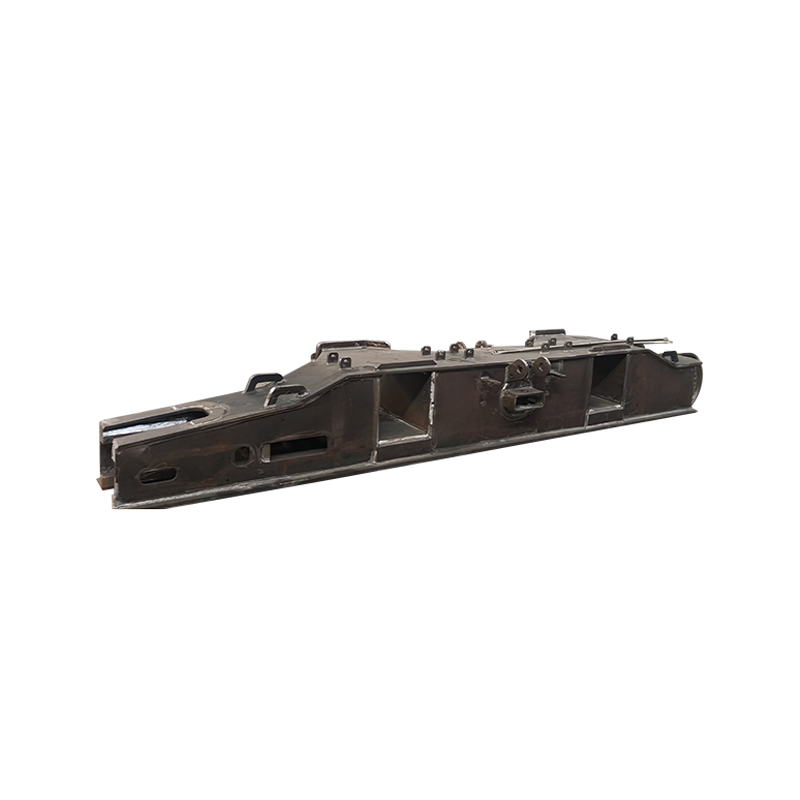
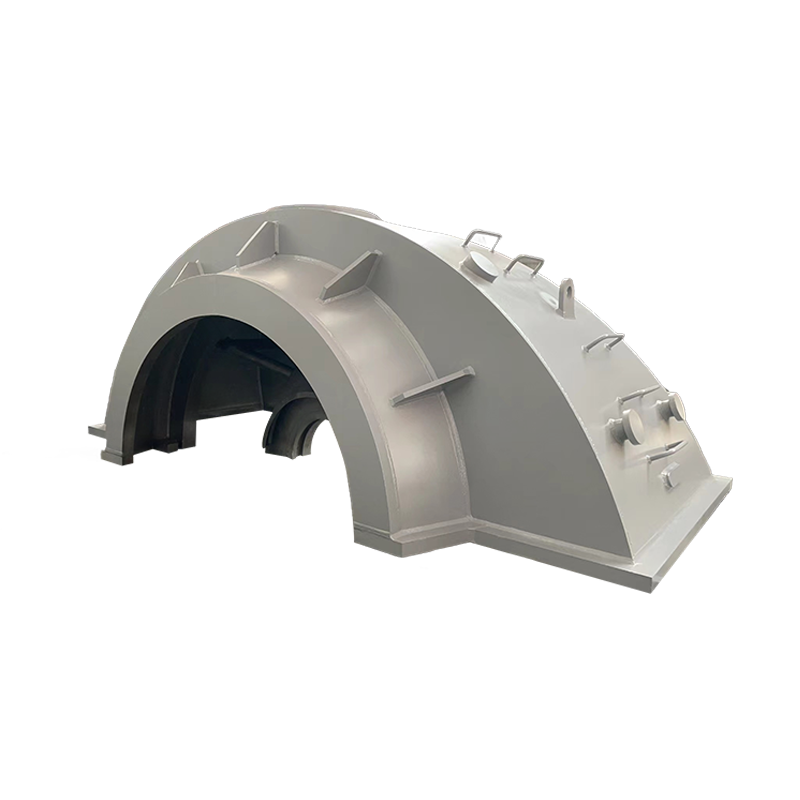
Many building designs require components that fall outside catalogue specifications. The facility’s specialization in non-standard steel structure equipment processing enables it to manufacture custom connection nodes, curved beams, heavy trusses, and integrated lifting frames. Engineering teams work directly with client specifications to develop fabrication-friendly solutions that maintain structural performance while reducing field welding and correction work.
This flexibility proves especially valuable for projects with architectural exposed structural steel, complex mezzanine systems, or retrofits where existing geometry must be matched precisely.
Quality Assurance That Protects Project Schedules
A robust quality system eliminates surprises during erection. The manufacturer applies a multi-stage inspection routine starting with raw material receiving, continuing through in-process dimensional checks, and concluding with final assembly verification. All full-penetration welds on critical joints undergo 100 percent ultrasonic testing, while other welds are inspected according to project-specified acceptance criteria.
Documentation packages include material certificates, weld maps, NDT reports, and surface treatment records, giving construction teams and certifying engineers full confidence in the delivered product.
Long-Term Value and Construction Efficiency
Offsite fabrication of steel structure components reduces on-site labor, minimizes weather-related delays, and generates less waste. Steel is fully recyclable, aligning with green building standards. Using pre-engineered, precision-made components can shorten the overall construction schedule by 20 to 30 percent, directly lowering financing and overhead costs for developers.
When a single partner handles design, manufacturing, and pre-shipment testing, the project team gains a single point of accountability. This integration translates into fewer change orders, faster assembly, and a structure that performs reliably over its entire service life.