 +86-573-86868360
 Inquiry
 English
 Español
 عربى
عربى

Content
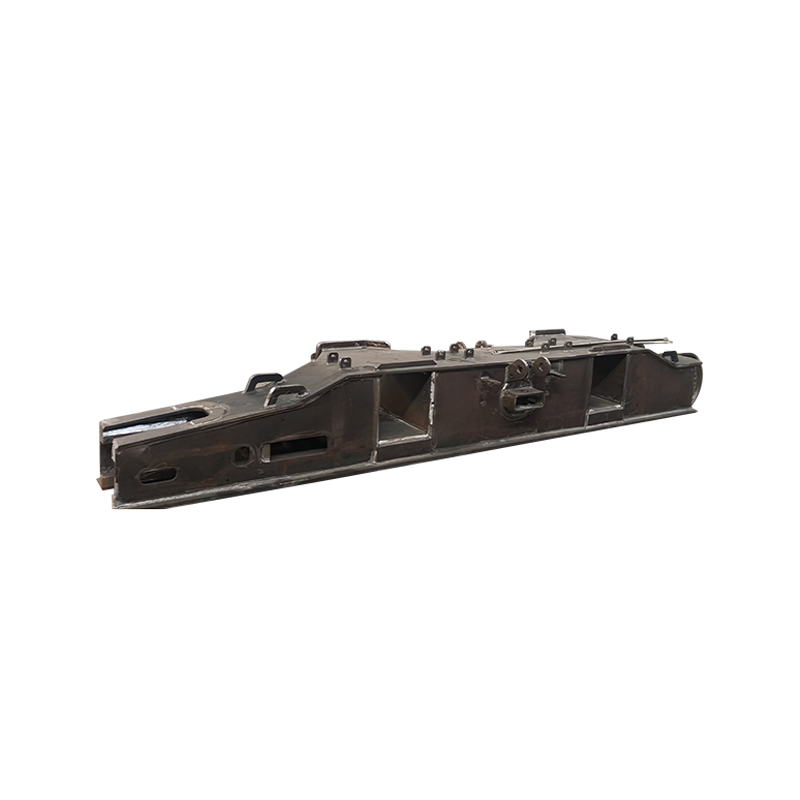
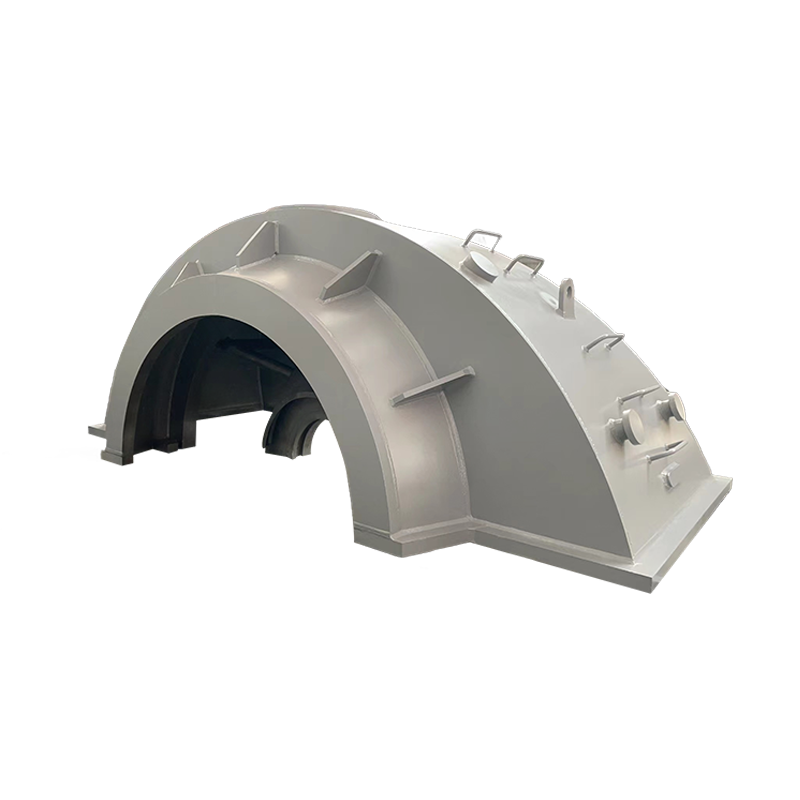
Defense industry steel structure components serve as the foundational framework for military equipment ranging from missile support systems to ground test platforms. These components must deliver exceptional strength-to-weight ratios while maintaining structural integrity under extreme operational conditions. Manufacturers achieve this balance through high-grade carbon steel selection, geometrically optimized lattice configurations, and precision fabrication processes that meet stringent military standards.
Material Selection and Grade Requirements
High-Strength Carbon Steel Specifications
Military-grade steel structures typically utilize carbon steel grades with yield strengths exceeding 355 MPa. Engineers select Q355 and Q460 series steels for primary load-bearing members because these grades offer tensile strengths between 470 and 620 MPa. The carbon content remains controlled between 0.12 and 0.20 percent to ensure weldability without sacrificing hardness. For satellite brackets and precision equipment frames, alloy modifications with manganese and silicon improve grain structure and fatigue resistance.
Surface Treatment and Corrosion Protection
Defense components operating in marine or tropical environments require protective treatments that extend service life beyond 20 years. Hot-dip galvanizing creates zinc coatings with thicknesses ranging from 65 to 85 micrometers, providing sacrificial corrosion protection. For components exposed to chemical agents, epoxy powder coating systems achieve dry film thicknesses of 120 to 150 micrometers. These treatments comply with salt spray test requirements of 1000 hours or more without substrate corrosion.
| Application Type | Steel Grade | Yield Strength MPa | Coating Type | Coating Thickness micrometers |
|---|---|---|---|---|
| Heavy load-bearing | Q460 | 460 | Hot-dip galvanized | 85 |
| Medium structural | Q355 | 355 | Epoxy powder | 120 |
| Precision frames | Q345B | 345 | Zinc-aluminum | 70 |
| Test platforms | Q390 | 390 | Dual-layer epoxy | 150 |
Structural Design Principles for Military Load Conditions
Lattice Architecture and Weight Optimization
Geometrically optimized lattice structures reduce material usage while maintaining structural capacity. Cellular configurations with triangular or hexagonal cell patterns distribute dynamic loads across multiple nodes, preventing single-point failures. Analysis shows that properly designed lattice components achieve weight reductions of 30 to 40 percent compared to solid plate alternatives. The open architecture also facilitates inspection access and cable routing within missile transport containers and radar enclosures.
Stress Distribution and Joint Engineering
Connection points in military steel structures experience concentrated stress during transport vibration and operational deployment. Engineers implement gusset plate reinforcements at beam-column intersections, increasing joint stiffness by 25 to 35 percent. Bolted connections using high-strength friction grip bolts rated at 10.9 grade ensure repeatable assembly in field conditions. Welded joints undergo complete penetration requirements with backing bars removed to eliminate crevice corrosion initiation sites.
Precision Fabrication and Quality Control
CNC Machining and Welding Protocols
Modern fabrication of defense steel components relies on computer numerical control machining to achieve dimensional tolerances within plus or minus 0.5 millimeters for critical interfaces. Plasma cutting systems process plate thicknesses up to 50 millimeters while maintaining edge squareness within 1 degree. Welding procedures follow prequalified joint configurations with interpass temperature control between 150 and 250 degrees Celsius. Welders maintain certification to specific process qualifications for military fabrication standards.
Non-Destructive Testing Requirements
Every structural weld in defense applications undergoes mandatory inspection to detect subsurface defects. Ultrasonic testing identifies internal discontinuities with detection thresholds of 2 millimeters in length. Magnetic particle inspection reveals surface cracks in ferromagnetic steels with sensitivity to 0.5 millimeter indications. Radiographic testing provides permanent records of weld quality for pressure-containing structures such as missile fuel tank drawing dies.
- Dimensional verification using coordinate measuring machines with 0.01 millimeter resolution
- Hardness testing at weld heat-affected zones to confirm values remain within 200 to 250 HV
- Load testing of completed assemblies to 125 percent of design working load
- Documentation of material certificates and heat numbers for full traceability
Primary Applications in Defense Systems
Aerospace and Missile Support Structures
Satellite launch brackets and missile fuel tank manufacturing dies represent precision-intensive applications requiring minimal thermal distortion. Drawing dies for missile shell production utilize pre-stressed steel frameworks that maintain bore geometry under 800-ton forming pressures. Satellite transport containers employ lattice base structures that isolate payloads from road-induced vibrations while keeping total container weight below 12 metric tons.
Ground-Based Test and Transport Platforms
Military equipment test platforms support static and dynamic loading of vehicle suspensions, weapon recoil systems, and electronic warfare cabinets. These platforms feature modular steel frameworks with standard bolted interfaces allowing reconfiguration between test campaigns. Transport skids for armored vehicle components incorporate integrated lifting lugs rated for 50-ton crane hooks with safety factors exceeding 4 to 1.
| Component Category | Function | Typical Load Capacity | Key Material Requirement |
|---|---|---|---|
| Missile support frames | Vertical storage and transport | 15 to 25 tons | High vibration resistance |
| Satellite brackets | Launch integration | 5 to 10 tons | Thermal stability |
| Test platforms | Equipment validation | 30 to 100 tons | Deflection control |
| Transport skids | Heavy logistics | 20 to 60 tons | Impact toughness |
Certification and Traceability Standards
Documentation and Material Traceability
Defense procurement regulations require complete traceability from raw material melting to final component delivery. Each steel plate carries a mill test certificate documenting chemical composition, mechanical properties, and heat treatment history. Fabrication shops maintain welding procedure specifications and welder qualification records with expiration tracking. These documents accompany components through storage, installation, and eventual decommissioning.
Environmental and Fatigue Testing
Components destined for operational deployment undergo accelerated life testing before acceptance. Fatigue testing subjects sample weldments to 2 million load cycles at 75 percent of yield stress to validate infinite life predictions. Temperature cycling between minus 40 and plus 60 degrees Celsius verifies dimensional stability for equipment deployed across multiple climate zones. Vibration tables simulate transport profiles including 5 to 2000 hertz frequency sweeps at 10 grms acceleration levels.