 +86-573-86868360
 Inquiry
 English
 Español
 عربى
عربى

Content
- 1 Why Steel Remains the Dominant Structural Material in Defense
- 2 Key Steel Grades Used in Defense Structure Components
- 3 Structural Component Categories in Defense Systems
- 4 Fabrication Standards and Quality Requirements
- 5 Corrosion Protection for Defense Steel Components
- 6 Design Considerations for Blast and Ballistic Resistance
- 7 Supply Chain and Procurement Challenges
- 8 Maintenance and Service Life of Defense Steel Structures
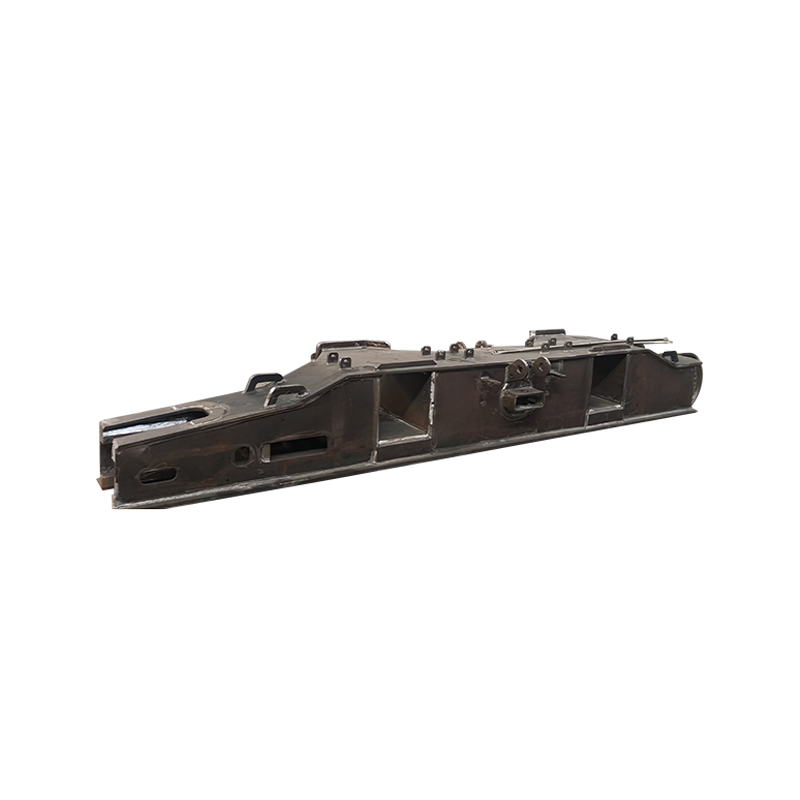
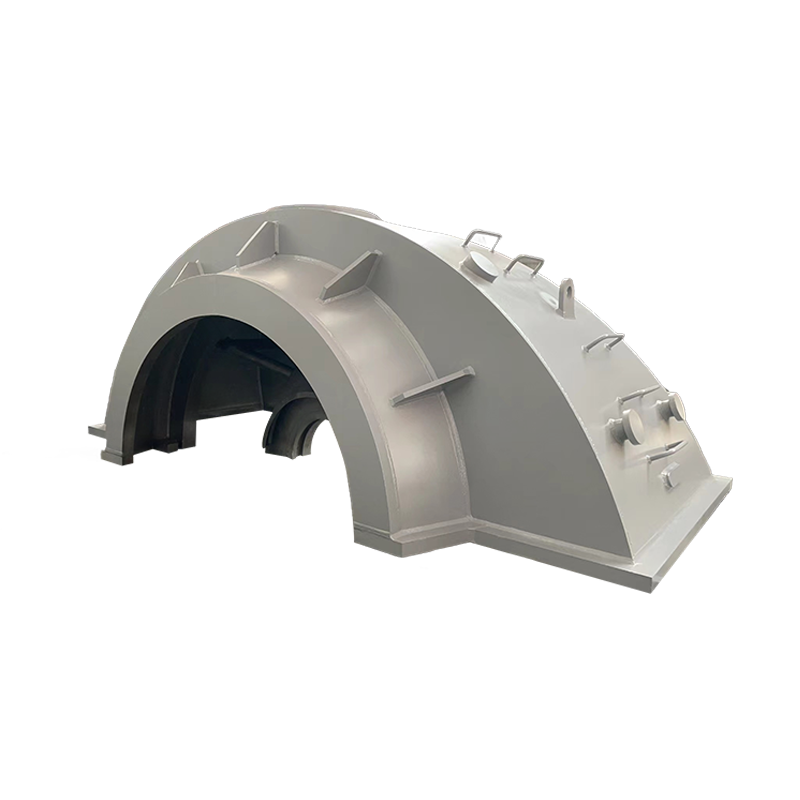
Defense Industry Steel Structure Component used in defense applications must meet significantly higher performance thresholds than those in commercial construction. Military-grade steel structures are engineered to withstand ballistic impact, blast overpressure, extreme thermal cycling, and corrosive environments while maintaining structural integrity under dynamic load conditions. The selection of materials, fabrication methods, and connection systems directly determines whether a structure survives operational demands or fails at a critical moment.
This guide covers the core considerations that engineers, procurement specialists, and defense contractors must understand when specifying or producing steel structure components for military use.
Why Steel Remains the Dominant Structural Material in Defense
Despite advances in composite materials and aluminum alloys, steel continues to account for the majority of structural components in defense infrastructure, armored vehicles, naval vessels, and weapons systems. The reasons are practical and rooted in decades of operational data.
High-strength steel alloys offer tensile strengths exceeding 1,400 MPa while remaining weldable and formable under field conditions. This combination is difficult to replicate with other materials at comparable cost. Steel also performs predictably across a wide temperature range, from arctic deployments at minus 50 degrees Celsius to desert environments exceeding 70 degrees Celsius.
From a logistics standpoint, steel components can be repaired using widely available equipment and skilled labor, which is a critical factor in forward-deployed military environments where specialized tooling may not be accessible.
Key Steel Grades Used in Defense Structure Components
Not all steel is suitable for defense applications. Component selection depends on the specific structural role, threat environment, and required service life. The following table summarizes the most widely specified grades.
| Steel Grade | Yield Strength (MPa) | Primary Defense Application | Key Characteristic |
|---|---|---|---|
| MIL-A-46100 | 1,100 - 1,310 | Armored vehicle hulls, ballistic panels | High hardness, ballistic resistance |
| HSLA-80 / HSLA-100 | 550 - 690 | Naval hull structures, submarine frames | High toughness, weldability |
| ASTM A514 | 690 | Heavy load-bearing frames, bunker structures | Quenched and tempered, high strength-to-weight |
| Maraging Steel (M250/M300) | 1,700 - 2,050 | Missile casings, rocket motor tubes | Ultra-high strength, low distortion after aging |
| 4340 Alloy Steel | 470 - 1,570 (heat treated) | Gear systems, shafts, structural fasteners | Excellent fatigue resistance, versatile heat treatment |
Grade selection must also account for the fabrication process. For example, maraging steel achieves its maximum strength only after a precise aging treatment at approximately 480 to 510 degrees Celsius for three to five hours, which requires controlled industrial conditions not always available in field manufacturing.
Structural Component Categories in Defense Systems
Defense steel structure components fall into several functional categories, each with distinct engineering demands.
Load-Bearing Frames and Primary Structural Members
These include beams, columns, trusses, and space frames used in military facilities, hardened shelters, weapons storage bunkers, and vehicle chassis. Primary structural members in blast-resistant facilities are typically designed for peak reflected overpressures of 35 to 70 kPa, with dynamic load factors applied to account for impulsive loading that far exceeds static equivalents. Connection details at joints are often the most critical design element, as failures under blast loading most commonly initiate at welds or bolted connections rather than in the base material.
Armor and Protective Plating
Rolled homogeneous armor and high-hardness steel plates are used as both structural and protective elements in armored vehicles and fixed installations. These components serve dual functions: they carry operational loads while also defeating or absorbing ballistic and fragmentation threats. The thickness and inclination angle of armor plating are calculated to defeat specific threat levels defined by NATO STANAG 4569 protection classes, which range from small arms fire at Level 1 to artillery shell fragments at Level 6.
Precision Machined Components
Weapon systems, fire control mechanisms, and propulsion assemblies depend on precision steel components held to tolerances as tight as plus or minus 0.005 mm. These parts require alloys with predictable machinability and dimensional stability after heat treatment. Any deviation from specified tolerances can affect weapon accuracy, cycling reliability, or system safety. In barrel and receiver manufacturing, steel must maintain straightness within 0.1 mm per meter after all machining and heat treatment operations.
Ship hulls, bulkheads, deck plating, and submarine pressure hulls are among the most demanding steel structure applications in the defense sector. Submarine pressure hulls are fabricated from HY-80 or HY-100 steel and must withstand external hydrostatic pressures at operational depths while also managing the internal stress from pressure cycling during dive and surface cycles. The weld quality requirements for submarine hull sections call for full penetration welds inspected by radiographic testing with zero defect tolerance for discontinuities exceeding 1.5 mm in any dimension.
Fabrication Standards and Quality Requirements
Defense component fabrication is governed by a layered system of military specifications, international standards, and contract-specific quality plans. Understanding these requirements is essential for both manufacturers and procurement teams.
Applicable Standards
- MIL-STD-1689: Fabrication, welding, and inspection of ship structures
- MIL-STD-1664: Structural design requirements for military vehicles
- AWS D1.1: Structural welding code for steel, referenced in many defense contracts
- ASTM A6: Standard specification for general requirements for rolled structural steel
- NATO STANAG 2895: Extreme climatic conditions and derived conditions for use in defining design and test requirements
Non-Destructive Testing Requirements
Defense steel components undergo more rigorous inspection than commercial equivalents. The following testing methods are commonly required:
- Ultrasonic testing (UT): Used to detect internal flaws, laminations, and weld defects in plate stock and structural sections. Sensitivity typically set to detect reflectors equivalent to 1.6 mm flat-bottom holes at the inspection depth.
- Magnetic particle inspection (MPI): Applied to ferromagnetic components to detect surface and near-surface discontinuities, particularly in weld heat-affected zones and high-stress areas.
- Radiographic testing (RT): Required for critical welds in pressure vessels, submarine structures, and ammunition handling equipment. Digital radiography has largely replaced film-based methods, improving detection resolution by approximately 20 percent.
- Hardness testing: Mandatory for all heat-treated components to verify that the specified hardness range has been achieved consistently across the part cross-section.
Traceability and Material Certification
Every steel component entering a defense supply chain must be accompanied by a certified material test report (CMTR) that documents chemical composition, mechanical test results, heat number, and compliance with the applicable specification. Lot traceability must be maintained throughout fabrication. If a component fails inspection, the traceability record allows quality engineers to identify and quarantine all other components from the same material heat, preventing systemic failures in fielded equipment.
Corrosion Protection for Defense Steel Components
Corrosion is one of the leading causes of premature failure and unplanned maintenance costs in military equipment. The United States Department of Defense has estimated that corrosion costs the military approximately 21 billion dollars annually, with structural steel components representing a significant portion of that figure.
Defense corrosion protection strategies are selected based on the deployment environment, expected service life, and maintenance accessibility.
- Thermal spray coatings: Zinc and aluminum thermal spray coatings provide galvanic protection and are applied to steel structures intended for marine or humid tropical environments. Coating thickness typically ranges from 100 to 300 microns.
- Epoxy primer and polyurethane topcoat systems: The standard corrosion protection system for military vehicles, providing both chemical resistance and abrasion resistance. Total dry film thickness is typically 125 to 200 microns.
- Hot-dip galvanizing: Used for fixed infrastructure components such as fencing, grating, and secondary structural elements. Zinc coating thickness must meet ASTM A123 requirements, with a minimum average coating weight of 610 g per square meter for steel sections thicker than 6 mm.
- Cathodic protection: Applied to buried pipelines, fuel storage structures, and ship hulls. Impressed current systems are preferred for large naval vessels, while sacrificial anodes are used for smaller craft and subsea components.
Design Considerations for Blast and Ballistic Resistance
Designing steel structures for defense environments requires understanding how materials behave under dynamic loading, which differs fundamentally from static structural analysis.
Dynamic Increase Factors
Under blast loading, steel exhibits higher yield and ultimate strength than under static conditions due to strain rate effects. Dynamic increase factors (DIFs) for mild steel yield strength typically range from 1.2 to 1.4 at strain rates associated with close-in explosions, meaning a structural section can sustain higher loads before yielding than static analysis would predict. Engineers must account for these factors when sizing members for blast-resistant design, as underestimating capacity leads to unnecessarily heavy structures while overestimating it creates unsafe conditions.
Energy Absorption and Ductility Requirements
Blast-resistant structures are designed to absorb energy through controlled plastic deformation rather than elastic response alone. This requires that steel components maintain high ductility at the strain rates generated by blast events. Charpy impact test values of 27 joules at minus 40 degrees Celsius are often specified as a minimum to ensure that structural steel will not exhibit brittle fracture behavior under combined low-temperature and dynamic loading conditions, which are realistic scenarios for arctic-deployed military structures.
Standoff Distance and Geometry
The geometry and layout of a steel structure significantly influence its blast performance. Increasing the standoff distance between a potential threat and a protected structure reduces the peak overpressure by the cube of the distance. A structure designed with a 10-meter standoff will face blast pressures approximately eight times lower than one with a 5-meter standoff for the same explosive mass. This makes site planning and barrier placement as important as the steel specification itself when designing protected military facilities.
Supply Chain and Procurement Challenges
Sourcing military-grade steel structure components involves constraints that do not apply to commercial procurement. Understanding these challenges allows project managers and logistics teams to plan more effectively.
Domestic Content Requirements
Many defense contracts require that steel materials originate from domestic sources. In the United States, the Berry Amendment and the Buy American Act restrict the use of foreign-sourced specialty metals in defense hardware. These requirements apply to the raw melt of the steel, not just the final fabricated form, meaning a component manufactured domestically from foreign-sourced steel billet may still be non-compliant. Procurement teams must establish material origin documentation at the melt stage.
Lead Times for Specialty Alloys
Maraging steel, HY-100, and certain armor plate grades are produced by a limited number of mills worldwide. Lead times for plate material in these grades can range from 16 to 40 weeks depending on mill scheduling and order volume. Programs that do not account for these lead times during the planning phase frequently experience schedule delays that cascade through vehicle assembly or facility construction timelines. Ordering long-lead steel materials at contract award, rather than waiting for design finalization, is a proven risk mitigation strategy on defense programs.
Counterfeit Material Risk
Fraudulent material test reports and substituted steel grades have been identified in defense supply chains on multiple occasions. A well-documented case from the 2010s involved fasteners certified as high-strength alloy steel that tested as mild steel, resulting in structural failures during proof load testing. Mitigating this risk requires independent laboratory verification of mechanical and chemical properties, particularly when sourcing through distributors rather than directly from qualified mills.
Maintenance and Service Life of Defense Steel Structures
Military steel structure components are typically designed for service lives of 20 to 30 years for vehicles, and 40 to 50 years for fixed infrastructure, subject to ongoing inspection and maintenance programs. Achieving these service lives requires disciplined condition monitoring and timely intervention when degradation is detected.
Fatigue crack growth in high-cycle components such as helicopter airframes and naval deck structures is managed through fracture mechanics-based inspection intervals. Crack growth models specify the maximum allowable flaw size and the inspection interval required to detect cracks before they reach critical dimensions, providing a quantitative basis for maintenance scheduling rather than relying on fixed calendar intervals.
For ground vehicle chassis and fixed structures, structural health monitoring using embedded sensors is increasingly being applied to provide real-time data on stress histories, allowing maintenance intervals to be adjusted based on actual usage rather than assumed worst-case scenarios. This approach has demonstrated reductions in unnecessary maintenance of up to 30 percent on monitored fleets in several pilot programs conducted by defense research agencies.