 +86-573-86868360
 Inquiry
 English
 Español
 عربى
عربى
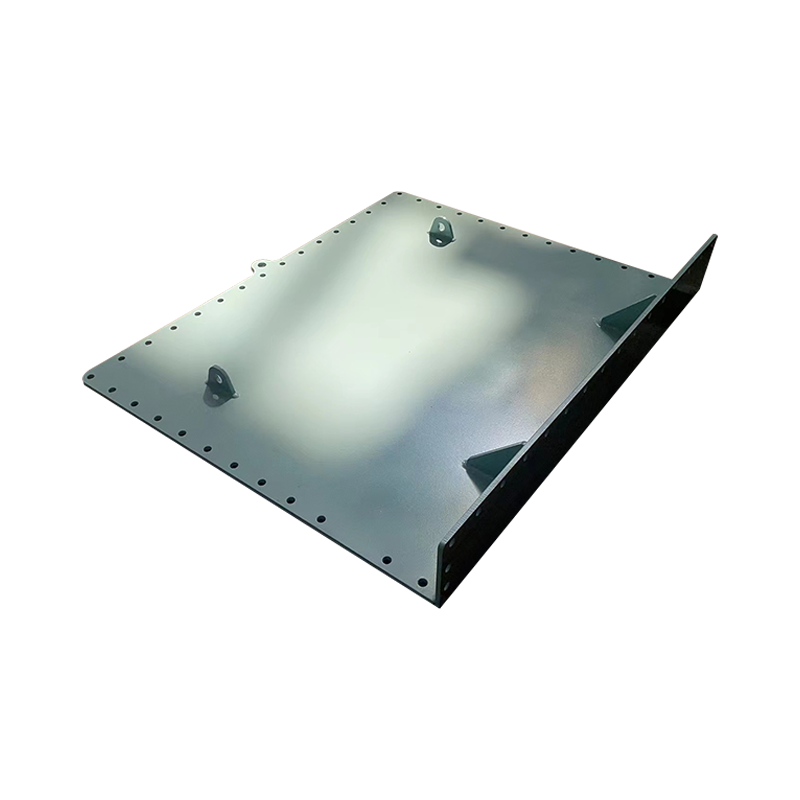
In the field of ships, carbon steel structural parts of diesel engine covers are important accessories to ensure the stable operation of diesel engines. The main body is made of carbon structural steel. This type of steel has good comprehensive performance. While meeting the requirements of mechanical performance, it has outstanding cost-effectiveness, so it is widely used in shipbuilding.
From the perspective of material, medium and low carbon steels are mostly used. For example, steel with a carbon content of about 0.20% has excellent weldability and processability, is easy to form, and can meet the manufacturing requirements of complex shapes of covers; while medium carbon steel with a slightly higher carbon content of 0.35% - 0.45% provides higher strength and hardness. After heat treatment, the performance is further optimized to ensure that the cover maintains structural integrity when subjected to certain external impacts and vibrations.
In terms of structural design, the cover is usually carefully built according to the layout and protection requirements of the diesel engine. It not only provides a closed protective space for the internal gear transmission system, various pump bodies and other components to maintain good lubrication conditions and effectively prevent dust, but also needs to consider the convenience of installation and maintenance of accessories. Some advanced-design covers have interfaces for connecting oil filter accessories and oil cooling accessories on their upper parts, and connecting channels are opened inside according to the medium flow relationship. These channels are arranged in layers in the height direction, which not only makes rational use of space but also optimizes the fluid transmission path. The middle and lower parts of the cover are generally designed to be relatively sturdy, used to install key and heavy components such as gear trains and shock absorbers, and the installation structural partss of the oil pump, cooling water pump and its thermostatic valve are orderly distributed on both sides.
In terms of manufacturing process, common ones are casting and welding processes. The casting process can form a complex structural parts in one piece to ensure the integrity and stability of each part of the cover; the welding process is highly flexible, and different parts can be spliced and assembled according to actual needs, and it is convenient for later maintenance and modification. After manufacturing, the cover is usually surface treated, such as coating with anti-rust paint, using epoxy glass flake coating, etc., to enhance its corrosion resistance in the high humidity and high salt environment of the ship, extend its service life, and ensure the long-term stable operation of the diesel engine.
In the field of ships, carbon steel structural parts of diesel engine covers are important accessories to ensure the stable operation of diesel engines. The main body is made of carbon structural steel. This type of steel has good comprehensive performance. While meeting the requirements of mechanical performance, it has outstanding cost-effectiveness, so it is widely used in shipbuilding.
From the perspective of material, medium and low carbon steels are mostly used. For example, steel with a carbon content of about 0.20% has excellent weldability and processability, is easy to form, and can meet the manufacturing requirements of complex shapes of covers; while medium carbon steel with a slightly higher carbon content of 0.35% - 0.45% provides higher strength and hardness. After heat treatment, the performance is further optimized to ensure that the cover maintains structural integrity when subjected to certain external impacts and vibrations.
In terms of structural design, the cover is usually carefully built according to the layout and protection requirements of the diesel engine. It not only provides a closed protective space for the internal gear transmission system, various pump bodies and other components to maintain good lubrication conditions and effectively prevent dust, but also needs to consider the convenience of installation and maintenance of accessories. Some advanced-design covers have interfaces for connecting oil filter accessories and oil cooling accessories on their upper parts, and connecting channels are opened inside according to the medium flow relationship. These channels are arranged in layers in the height direction, which not only makes rational use of space but also optimizes the fluid transmission path. The middle and lower parts of the cover are generally designed to be relatively sturdy, used to install key and heavy components such as gear trains and shock absorbers, and the installation structural partss of the oil pump, cooling water pump and its thermostatic valve are orderly distributed on both sides.
In terms of manufacturing process, casting and welding processes are common. The casting process can form complex structural partss in one piece to ensure the integrity and stability of each part of the cover; the welding process is highly flexible and can be spliced and assembled according to actual needs. It is also convenient for later maintenance and modification. After manufacturing, the cover is usually surface treated, such as coating with anti-rust paint, using epoxy glass flake coating, etc., to enhance its corrosion resistance in the high humidity and high salt environment of the ship, extend its service life, and ensure the long-term stable operation of the diesel engine.